What a Producer Looks For in a Script

What a Producer Looks For in a Script

What a Producer Looks For in a Script

Most writers think producers are looking for “great writing.”
They’re not.

They’re looking for a show they can actually produce.

There’s a painful truth most playwrights don’t hear early enough:

A script can be brilliant—and still never get produced.

Why? Because producers aren’t just evaluating a story.
They’re evaluating story + structure + scalability + relationships.

Here’s what they’re actually looking for:


1. A Clear, Compelling Concept

If you can’t explain your show in one sentence, you don’t have a show—you have an idea.

“Six innocent people on death row.”
That’s a show.

2. A Fresh Take on a Familiar Story

There are no new stories. Only new perspectives.

The question is:
Why this version? Why now?

3. Strong Structural Spine

Beginning. Middle. End.

If your first 15 pages don’t establish:

  • the world
  • the protagonist
  • the central conflict

You’ve already lost us.

4. A Protagonist Who Wants Something

Not vaguely. Not internally. Not philosophically.

Actively. Urgently. Passionately.

No want = no action.

5. Active, Onstage Drama

If your play is primarily people sitting around talking…

…it’s just not interesting.

6. Distinct Characters

If everyone sounds the same, and looks the same…

You don’t have interesting enough characters to hold our attention.

7. Clear Theatrical Language & Devices

Flashbacks?

Immersive theater?
Stylized staging?

We don’t go to the theater to see everyday life—we go to experience a new world or story told in a new way.

Establish your storytelling devices early.

8. Musical Integrity

Songs must:

  • advance story
  • reveal character
  • keep us entertained

Otherwise, they’re just good songs. Not musical theater songs.

9. Producibility

This is where most scripts die.

Producers are thinking:

  • How large is the cast?
  • How complex is the set?
  • Can this draw an audience?

If it’s not producible, it’s not viable.

10. A Collaborative Writer

This is the hidden gem.

Producers aren’t just choosing scripts.

They’re thinking:
“Do I want to be in a long-term relationship with this person?”

What are producers really looking for in a script?

Great writing gets attention. But it’s not the only thing we look for.

Producible writing gets produced.

And the writers who understand that difference?
They’re the ones who build careers.

If this opened your eyes to how producers actually evaluate your script…

Then you’ll want to be in the room for our live training:

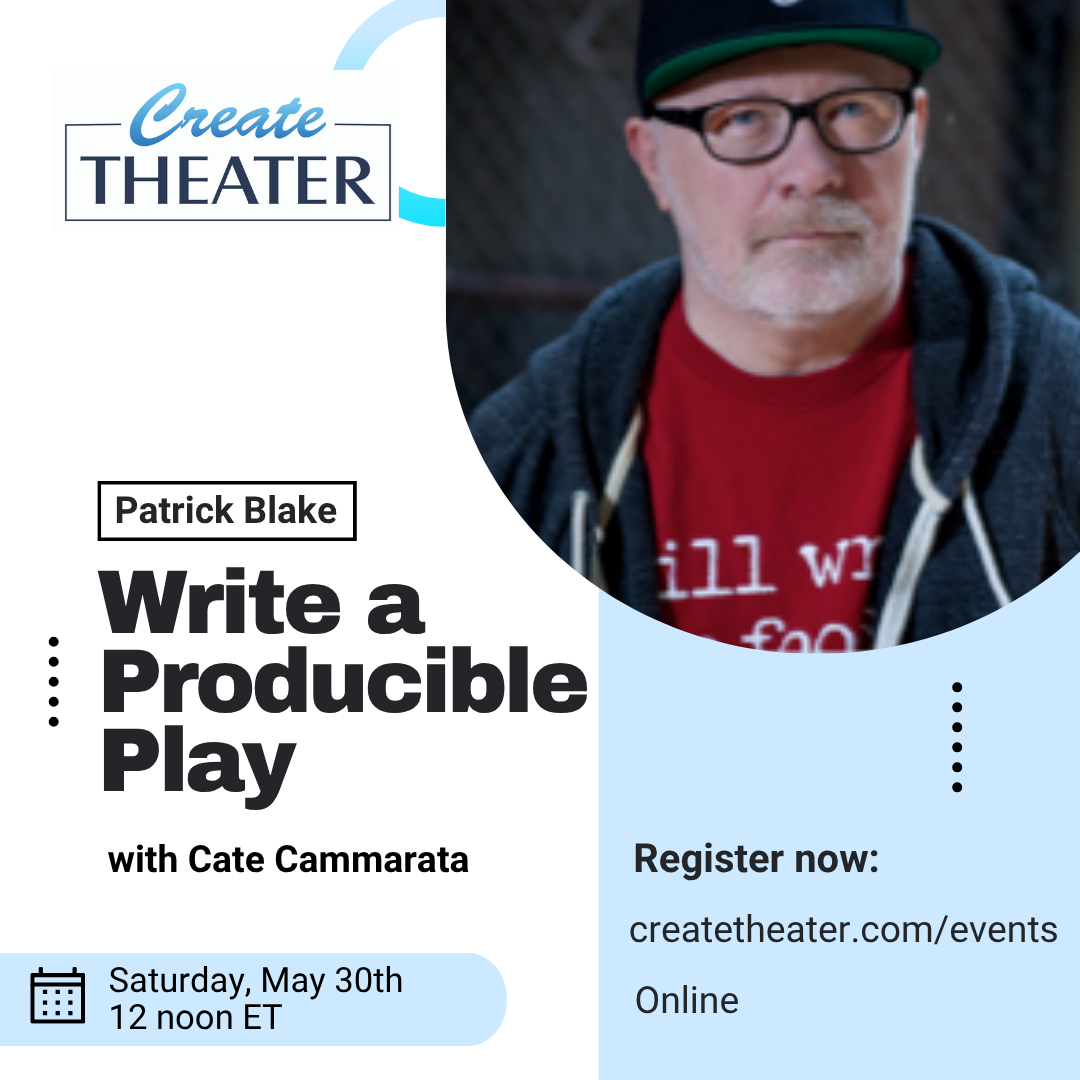
Write a Producible Play Webinar on May 30th

 Off-Broadway Producer Patrick Blake and I will walk you through exactly how to check your work so it’s not just compelling, but something a producer can get on board with.

Stay in the loop with our upcoming workshops!

The World & the Want: Why Many Musicals Fail in the First 15 Minutes

The World & the Want: Why Many Musicals Fail in the First 15 Minutes

The World & The Want: Why Many Musicals Fail in the First 15 Minutes

Many musicals don’t fail in Act Two.

They fail in the first 10–15 minutes.

Not because the writers aren’t talented—
but because the foundation isn’t clear.

If your audience doesn’t understand the world of your show and what your protagonist wants, they have nothing to hold onto.

And if they don’t have that?
They’re gone—whether they realize it or not.

Start Here: The Stasis of Your Musical

At the beginning of Act One, you are establishing what’s called the stasis—the “normal world” before everything changes.

This is where you introduce:

  • Your main character (the one with the WANT)
  • The dramatic premise (what the story is about)
  • The dramatic situation (the circumstances we’re stepping into)
  • And the inciting incident (what’s about to disrupt everything)

This is not setup for the sake of setup.

This is where you teach the audience how to watch your show.

The Opening Number Is a Contract

Your opening number is doing far more work than most writers realize.

It must:

  • Invite the audience into the world
  • Establish tone, style, and storytelling language
  • Introduce key characters
  • Signal what kind of experience this will be

In other words:

It’s a promise.

And your show has to deliver on that promise for the next two hours.

As Stephen Sondheim said (building on what he learned from Oscar Hammerstein II):
“The Opening Number must tell the audience everything they need to know.”

If your opening number is unclear, unfocused, or tonally confused—
your audience will spend the rest of the show trying to catch up.

The Inciting Incident: Breaking the World

Once the world is established, something must break it.

This is your inciting incident—the event that sets the story in motion.

And here’s where writers often go wrong:

The inciting incident should not be passive or internal.
It works best when it is thrust upon the protagonist from the outside.

Why?

Because it forces action.

It disrupts the stasis and launches the story into motion.


The Point of No Return

After the inciting incident, your protagonist reaches a critical moment: The Point of No Return.

This is where they (your protagonist) must make a choice.

Not something that happens to them—
but something they actively decide.

From this point on, there is no going back.

This is where your story truly begins.


The I WANT Song: The Engine of Your Musical

If there is one moment you cannot afford to get wrong, it’s this:

The I Want Song.

This is where:

  • We understand who the protagonist is
  • We understand what they want
  • And we decide whether we care

This “want” becomes the super objective—the driving force of the entire show.

As Stephen Schwartz puts it:

“Pretty much any successful musical you can name has an I Want Song within the first 15 minutes… the lack of such a moment is a weakness.”

The I Want Song:

  • Clarifies the goal
  • Points the way forward
  • Invites the audience to invest emotionally

If we don’t understand the want—
we can’t root for the journey.

Not All Songs Do the Same Job

In this early section of your musical, you’re balancing three types of songs:

  • “I Am” songs – who the character is
  • “I Feel” songs – emotional processing
  • “I Want” songs – forward-driving desire

The key is this:

Every song must move the action forward.

If it doesn’t—cut it.

Because musical theater is not about expression alone.
It’s about moment to moment action onstage.


This Is Where Most Writers Get Lost

Writers often:

  • Blur the world instead of defining it
  • Delay the inciting incident
  • Avoid committing to a clear WANT
  • Or overload the opening with exposition that doesn’t move

The result?

A musical that feels slow, unclear, or unfocused—
even if the writing itself is strong.


Most Writers Think They Have This. They Don’t.

Here’s what I see over and over again:

  • An opening number that doesn’t actually define the world
  • An inciting incident that comes too late—or isn’t clear
  • An “I Want” song that’s vague or generic
  • A protagonist we don’t fully understand or root for

On paper, it all looks right.

In performance, it falls flat.

Because this work isn’t about knowing the terms.
It’s about executing them.

_______________________________________________

Ready for the Next Step?

Once your world is clear and your protagonist’s want is established—

you’re ready for the real work:

Building Act One so it actually drives forward.

Because setting it up is one thing.

Sustaining momentum is another.

If You Want to Make Your Act One Work…

Our NYC Musical Development Workshop 1: Developing the World & the Want is April 26th at 12 noon ET.
We take what you’ve written —and make sure it functions onstage.

Want to present your work on Sunday April 26th?

Stay in the loop with our upcoming workshops!

How to Beat the Feedback Freeze and Keep Moving Forward

How to Beat the Feedback Freeze and Keep Moving Forward

What to Do With Notes When You’re Feeling Stuck

You’ve just had a table reading and got feedback on your new musical or play.

Oof. You sit through the conversation, scribble some notes. And suddenly, your brain goes silent.

Everything you’ve done feels wrong. You don’t know where to begin. Why didn’t they get it?

Welcome to the feedback freeze, that uncomfortable post-notes paralysis where you’re too overwhelmed to revise, but too self-aware to keep drafting blindly.

We’ve all been there.

The good news? This moment doesn’t mean you’re failing—it means you’re creating something. It means you’re growing as an artist. And if you let it, this moment can become the most transformative part of your process.

Take a deep breath (and maybe take a couple of days), and let’s look at this a bit differently.

Yes, it can be overwhelming. Here’s some tricks that my writers use to move through the freeze and keep creating. 

Feel First. Don’t Fix. Not Yet.

Before you do anything practical with you feedback—feel your feelings. Let yourself be annoyed. Defensive. Confused. Crushed. Whatever. Allow your feelings to be.

Feedback can feel personal, even when it’s not. The important thing is to give yourself space to emotionally digest before deciding what to do.

Try these:

  • Journaling your gut reactions
  • Taking a walk or 24-hour pause
  • Reminding yourself: Notes are about the work, not your worth

Processing first means you won’t overcorrect or reject ideas just because they hurt.

Sort the Useful from the Noise

Not all feedback is created equal. Some notes are gold. Others are well-meaning… but not necessarily correct for your work.

Ask yourself:

  • Does this feedback align with what I’m trying to make? Does it feel right somehow to me? Is it something that I’ve suspected myself?
  • Is it pointing out a real problem, even if the suggested fix isn’t right?
  • Have I heard this more than once?
  • Do I trust the feedback given from this particular individual?

Create three buckets:

  • Definitely Use
  • Maybe/Needs More Thought
  • Not Helpful for This Draft

It’s important to let your own artistic sense and goals guide the filter before you change even a single word in your script.

Build a Feedback-to-Action Workflow

Once you’ve sorted everything out, translate your top notes into clear, bite-sized actions.

Instead of “make the second act tighter,” try:

  • “Cut 5–7 minutes from Act 2”
  • “Clarify character X’s decision at midpoint”
  • “Reorder scenes 7 and 8 for better momentum”

Think like a director giving yourself cues. Make it actionable.

Use tools like:

  • A revision spreadsheet
  • Sticky notes by scene on the wall
  • Index cards with individual notes per moment

The goal: to transform abstract feedback into a concrete to-do list instead of stewing in your thoughts.

Give Yourself Time—But Not Too Much

You don’t have to implement feedback right away. In fact, rushing can lead to muddy drafts.
But beware the other trap: overthinking yourself into a corner.

Instead, try:

  • Setting a date to revisit the notes with fresh eyes
  • Giving yourself a short feedback “cooldown” window—3 to 5 days max, then taking another look
  • Schedule a “next step” writing session before you feel totally ready

You’ll get clarity faster when you’re back in motion and thinking clearly.

Set Mini-Goals Based on the Notes

You don’t have to fix everything at once.

Start with one mini-goal:

  • “Improve the inciting incident’s clarity”
  • “Revise character B’s final song lyric”
  • “Draft a new scene that addresses note X”

Each small step rebuilds your momentum. And the more you do, the more your confidence returns.

Remember: Feedback is fuel. Not a final verdict.

You’re an artist. A writer. The builder of this unique and interesting world. Notes are there to support your vision—not replace it.

So feel your feelings. Take what helps. Break it into action. And keep writing the story only you can tell.

Want a community to help you process and act on feedback?
Think about joining our Writer’s Residence, the Experts Theater Company.

How to Make Progress When You Don’t Know Your Show’s Ending Yet

How to Make Progress When You Don’t Know Your Show’s Ending Yet

For Playwrights and Musical Theater Writers Who Thrive in Discovery Mode

You’ve got a great setup. Characters who pop. A world that feels rich with possibilities. But there’s just one little issue…

You have no idea how your show ends.

Or you have an idea, but it’s not landing yet.

Sound familiar?

If you’re a playwright or musical theater writer trying to write a new piece without a clear roadmap, you’re not alone—and you’re not doing it wrong. Sometimes the ending comes to us first, but then other times it doesn’t. We’ve created characters first, maybe, but we can’t quite nail the ending.

What to do?

This is very much on my mind currently, as I’m producing a play to open in June and, well, the ending still hasn’t “revealed itself.” Yikes.

Plenty of brilliant, finished shows started out as messy, half-formed drafts written by writers who trusted the process before they knew the destination.

Here’s some suggestions we’re using to keep making progress on your new script without knowing the ending yet.

Embrace “Discovery” Writing

Not everyone writes from an outline—and that’s okay. Discovery writing (also called “pantsing”) means you find the story by writing it. You let your characters talk, get into trouble, and surprise you. It’s organic. It’s chaotic. And it can lead to some of your most original ideas.

The key is to stay curious instead of panicked. If you don’t know where it’s going yet, that’s not a failure—that’s fuel. You’re exploring the terrain while building the map.

Explore Your Characters’ Wants and Raise the Stakes

When you can’t see the end, zoom in on your characters’ desires. What does each of them want—emotionally, practically, spiritually? What’s in their way?

The more clearly you understand what’s driving them and the obstacles in their way, the more naturally plot points and conflicts will arise. Ask yourself:

  • What would they do next to get what they want?
  • What would challenge them the most?
  • What are they afraid of losing?

The answers might lead you to your next scene—or your eventual ending.

Write the Middle with a Flexible Mindset

The middle of your show is where things evolve, deepen, and get complicated. Even without a firm ending, you can write scenes that test relationships, raise the stakes, and introduce twists (typically the midpoint reversal) that excite you.

Be flexible. If a character veers off course or a subplot emerges unexpectedly, follow it for a bit. Revision is where you make it neat. Drafting is where you let it be messy and alive. Have more fun with this! The more fun you have now, the more fun your audience will have later.

Use “What If” Scenarios as Your Daily Prompts

Stuck? Try “what if” questions to jumpstart your writing:

  • What if the antagonist suddenly helped the protagonist?
  • What if the lovers don’t end up together?
  • What if someone makes the wrong choice and it spirals?

These prompts don’t have to “fit” your eventual structure. They’re experiments to discover new layers in your story. Some might stick. Others might spark ideas you didn’t expect.

Track Your Theme and Emotional Arcs

Even if the plot isn’t clear, your theme can be. What are you trying to say? What feeling or idea keeps bubbling up as you write? What “gift” are you wanting to give the audience at the end?

Track how your characters are emotionally changing from scene to scene. Are they getting closer to something? Losing something? Growing?

Emotional arcs can anchor your show even before the structure is solid. If you follow the emotional truth, the ending often reveals itself when the time is right.

Keep Going, Even If It’s Imperfect

A draft doesn’t have to be linear. It doesn’t have to be “complete.” It just has to exist.

You’ll revise. You’ll cut. You’ll rewrite the ending three times. But if you stop writing because you don’t know where it’s going, you’ll never find out.

So trust your instincts. Let the show teach you what it wants to be. And remember: the ending might not be what you planned—but it might be exactly what your show needs.

Remember, a play is never “finished” – it’s just produced.

What We’re Doing Now:

Among other things, I’ve hired a director who lives in the world of the play, and a really smart playwright/dramaturg who does not. It helps to have divergent opinions to fully round out the characters clearly.

We’re having heady intellectual and psychological discussions between the four of us (playwright, producer, director and dramaturg) about every character, motive, and scene, reviewing the moment-to-moment stakes and thoughts motivating action. Over Zoom, as we’re working artists with commitments out of NYC.

We’re reviewing external documents that shape the issues in the world of the play together, to fully understand the lived experience of the family we’re portraying, and the issues they believe in.

Heady stuff, but all in all an exhilarating creative process. And I know the show will benefit from this research.

Your Turn:
How about you? Are you writing a musical or play without knowing the ending yet? What helps you keep going?

Share the way you go about your creative process (or pose questions) in the comments! We’d like to hear what you do.

Building Your Musical One Song at a Time

Building Your Musical One Song at a Time

How Daily Songwriting Habits Can Move Your Musical Forward

Writing a musical can feel like climbing a mountain (I see you singing the song right now) —and doing it alone makes the peak look farther and steeper.

And definitely harder.

Here’s the truth: the best musicals aren’t written in giant leaps. They’re built one song at a time.

If you’re a playwright or musical writer dreaming up your next show, it’s time to think of songwriting as a daily habit, not as a once-in-a-while burst of genius.

Yes, life gets crazy busy. You don’t have to tell me! But if our goal is to write a musical, it won’t write itself. So – let’s explore five practical ways you can build your musical steadily and intentionally every day, starting today.

Isn’t the new year the time to begin a new routine, to make sure that get what’s really important in life?

1. Balance Book Scenes with Musical Moments

Before diving into the music, zoom out and look at the big picture: where should a song live in this scene? Or maybe, does this scene need a different song?

Every song should earn its place in your story. It needs to do something mere dialogue can’t do as well—

  • capture a surge of emotion
  • reveal a character’s inner world/fears/dreams
  • escalate a situation beyond words.

So, as you’re outlining or drafting your book, ask yourself:

  1. Is this a “song moment”? Song spotting is a skill that gets better with practice.
  2. Would music elevate this scene? Remember, when the emotion gets too high to speak, characters sing.
  3. Is the character emotionally charged enough to sing? Tweak the lead up to the song, and maybe increase the stakes for the character in the story.
  4. Keep the energy moving in the scene. Watch the overuse of ballads, and always look for a more active song choice. Extra kuddos if you make it fun!

Think of your songs as emotional anchors in the book. When you spot one, jot it down—even if it’s just a placeholder title or emotion. That’s your cue to imagine a new song and start writing.

2. Create a Songwriting Ritual (Lyric, Melody, or Both)

Like any craft, songwriting grows with consistency. Whether you’re a lyricist, composer, or both, carve out daily (or at least weekly) time just to concentrate on your musical.

Your ritual doesn’t need to be long or fancy:

  • 20 minutes each morning with your coffee
  • A lyric brainstorm on your lunch break
  • Improvising melody ideas in voice memos during walks

Some writers work melody-first. Others start with lyrics. Some begin with a hook or a strong concept. The key is to find your rhythm and make it regular.

Even allowing yourself permission to write one “bad” song per day – to just get something down – will push your musical forward. Chances arre your song won’t really be that bad.

Rituals remove the pressure to be brilliant and replace it with permission to explore. You’re not writing a perfect song—you’re developing a habit that builds momentum. Every day.

3. Build a Song Map for Your Show

A song map is your musical’s emotional and narrative blueprint. It’s a living document that tracks:

  • Song titles or ideas
  • Who sings
  • What the song accomplishes
  • Where it lands in the story

It helps you spot pacing issues, character arcs, and tonal shifts. More importantly, it shows you what to write next by showing you what you still need in your show.

Think of it like a musical’s table of contents. You can even color-code it: solos vs. duets, reprises, ensemble numbers, etc. This gives you structure—and structure fuels creativity.

4. Know When to Collaborate (and When to Wait)

If you’re not writing both music and lyrics, collaboration is inevitable—but it doesn’t have to be immediate.

In fact, having a few lyrics or scenes sketched out before bringing in a partner can give your project clarity and momentum. It also helps you:

  • Attract the right collaborator
  • Share your vision clearly
  • Avoid starting from a blank page together

Once you have a few ideas or songs drafted, start the conversation. Look for someone who complements your style and shares your storytelling values. Chemistry is everything in a creative partnership.

5. Use Tools to Demo Songs on Your Own

Don’t wait for a fancy studio to bring your songs to life. You can build simple, expressive demos with tools you already have.

Try these:

  • Voice Memos (iPhone/Android): Sing lyrics or melody ideas on the go.
  • GarageBand (Mac/iOS): Record vocals over instrumentals, add loops, or play with arrangements.
  • Logic Pro / Ableton / FL Studio: More advanced DAWs for fuller demos.
  • Noteflight / MuseScore: Score and share written music easily.
  • Audimee: “Audition” different AI voices to create demos using different characters
  • Suno: upload your song into Suno to brainstorm different instruments or rhythms, to modulate a new ending, or to even switch your song into a different musical genre.

Even if you’re “not a singer,” your voice can still carry emotion. A rough demo is better than a silent idea—it makes your work feel real, and that feeling fuels progress.

Final Thought: Songs Tell Stories

Each song you write adds dimension to your characters and shape to your story. So don’t wait for inspiration—create space for it for it to happen.

Make sure that your song begins in one place and moves over the three minutes to end in a diffeent place.

Build your musical one habit, one page, and one song at a time, with a routine that works every day.

Your mountain isn’t as high as it looks when you climb it step by step.

Want to find the perfect collaborator this year?

Register for the FREE CreateTheater Jumpstart January Event on January 31st!

The Daily Draft: How to Avoid Getting Lost Rewriting the Same Scene

The Daily Draft: How to Avoid Getting Lost Rewriting the Same Scene

Ever find yourself “working on your show” for hours… only to realize you’ve just reworked the same five lines over and over again?

Yeah, it happens to everyone.

Rewriting is the very essence of writing—but if you do it too soon, it can also become a trap. You start chasing polish when what you really need is momentum.

Let’s talk about how to move forward, not in circles.

Why Rewriting Too Early Can Stall Momentum

Early rewrites feel productive. You’re refining! You’re crafting! But sometimes, you’re just treading water—you’re avoiding the possibility of new pages, new choices, and possibly taking a greater narrative risk.

Why? You can’t refine what doesn’t exist yet.

If you keep rewriting Act One before you’ve written Act Two, you might be perfecting a setup with no payoff—or worse, writing yourself into a corner.

You need to get all of your early ideas into a “vomit draft.”

Draft First, Refine Later

There’s a reason “write a terrible first draft” is classic advice.

Your first goal is completion, not perfection. That raw, messy first draft will give you the whole shape of the story—so when it’s time to revise, you’re sculpting something solid instead of trying to polish fog.

Think of it like building a set; you can’t paint trim before the walls are up.

3 Tips to Follow with Early Drafts

Want to make future rewrites easier and stay in forward motion? Try using these tried-and-true tips as you get that first draft down.

1. Leave Notes for Future You

Instead of rewriting a scene, jot down notes: [This moment feels flat. Add more tension.]
Keep going. Come back later.

2. Highlight Instead of Fixing

Use bold or colored highlights to mark moments you know need work. That way you don’t break your flow mid-draft.

3. “Scene Zero” Writing

Write exploratory scenes (monologues, backstory moments, offstage events) that don’t go in the draft. It really helps to develop your characters and context without stalling progress, especially when you’re in that delightful space of working the play out in your head.

Timeboxing: Write Fast, Rework Smarter

Try giving yourself clear windows for writing and revising:

  • Drafting Window (30–60 minutes): Write forward only. No edits.
  • Revision Window (15–30 minutes): Review past scenes or make light adjustments.

Keep the two separate, ideally on different days. Writing and editing are two separate processes; don’t combine them.

How to Know When It’s Actually Time to Rewrite

Not sure if you’re stalling or genuinely need to rework a scene, an act or an opening number? Ask yourself:

  • Does this rewrite fix a story-level issue (stakes, arc, clarity)?
  • Do I have a complete draft—or am I trying to polish the puzzle without all the pieces?
  • Will revising this now help me move forward—or just feel safer than starting a new scene?

If your answer leans toward progress, go for it. If not, trust the draft and keep going.

Did Your Writing Group Get It?

One of the benefits of having a writing group is that it’s one of the best places to try out your new scenes. If there are any questions, any confusion about what’s happening, or thoughts about whether your new pages are too expository, pushing the action forward sufficients or stalling it, your writing group will let you know.

If it’s a good writing group.  We’ve got some really good ones. (Check out ETC if you’re interested…)

Final Thought: Forward Momentum Is a Skill

You don’t need to “earn” the right to finish a draft. You need to build the habit of finishing.

Let your first drafts be messy, unfinished, imperfect. Give yourself a chance to find the story and live with the characters before you try to fix it.

Because no one ever polished a scene that didn’t exist.

Want help turning this into a daily writing habit?
I’ve got a free worksheet for that—just say the word.

Not on our newsletter? Sign up here.