
You Don’t Have a Writing Problem. You Have a Positioning Problem.
Many playwrights think the reason they aren’t getting produced is because the script “isn’t ready yet.”
Sometimes that’s true.
But more often?
The play is not being positioned in a way that helps the industry understand:
- where it belongs,
- who it’s for,
- why it matters now,
- and why a theater should invest in it.
That’s not a writing problem.
That’s a positioning problem.
And positioning is one of the most overlooked career secrets in theater.
Because here’s the uncomfortable truth:
Regional theaters aren’t just selecting “the best plays.”
They are selecting:
- plays that fit their audience,
- plays that fit their mission,
- plays they know how to market,
- plays that help them raise money,
- and voices they understand how to champion.
If industry professionals can’t quickly understand where your work fits in, they move on.
Not because your writing lacks talent.
But because your work feels difficult to place.
The Industry Needs a Clear Narrative
When artistic directors, literary managers, producers, or development staff talk about writers among themselves, they simplify.
Not maliciously. Practically.
They say things like:
- “She writes elevated working-class dramas.”
- “He’s doing smart political satire.”
- “They’re developing commercially viable musicals.”
- “She writes female-driven dark comedies.”
- “He’s very good with intimate family plays.”
That becomes your positioning.
And if you don’t shape that narrative intentionally, the industry will either:
- Create one for you, or
- Not remember you at all.
Ouch.
Many playwrights unintentionally position themselves as:
- “all over the place,”
- difficult to categorize,
- perpetually developing,
- or unclear in voice and audience.
That doesn’t help anyone want to produce your work.
Theater institutions are risk-averse.
Clarity reduces perceived risk.
“But I Don’t Want to Be Put in a Box
This is where many writers resist positioning.
They think:
“I don’t want to limit myself creatively.”
You’re not limiting your artistry.
You’re creating a recognizable entry point.
The industry needs to find a way into your work.
Once audiences and theaters trust your voice, you can expand.
But until then, clarity matters more than range.
If every bio, every submission, every website page, and every conversation describes your work differently, people cannot create a coherent understanding of you as an artist.
And confusion stops momentum.
Regional Theaters Need Specific Things
Another big mistake that playwrights make is assuming theaters are looking for “great writing” in the abstract.
They’re not.
Regional theaters are looking for plays that solve their problems.
That may sound cynical, but it’s actually empowering once you understand it.
A theater may need:
- audience-friendly new work,
- plays with flexible casting,
- small-budget productions,
- stories that connect to their community,
- work that attracts younger audiences,
- diverse programming,
- or material that fits a specific initiative or grant.
Your job is not merely to write a play.
Your job is to understand:
Why would THIS theater want THIS play right now?
That changes how you position your work.
Stop Pitching Your Play Like a Student
Also, many playwrights still describe their work academically instead of strategically.
They focus on:
- themes,
- symbolism,
- inspiration,
- process,
- or what the play “means.”
But theaters are evaluating:
- audience connection,
- producibility,
- casting,
- scalability,
- relevance,
- and programming fit.
Compare these two descriptions:
Weak Positioning
“A poetic exploration of grief and memory examining the fragmented nature of identity.”
Stronger Positioning
“A funny and emotionally grounded four-person drama about two sisters forced to run their family funeral home after their father’s death.”
One sounds abstract.
The other sounds clear.
One creates questions.
The other creates possibility.
Your Career Is Not Built One Submission at a Time
Another major misconception:
Writers are led to believe their careers are built through isolated opportunities.
One submission.
One contest.
One reading.
One fellowship.
Instead, sustainable careers are built through cumulative positioning.
Every piece of public-facing material should reinforce the same narrative:
- your artistic voice,
- your audience,
- your scale,
- your strengths,
- and your producibility.
That includes:
- your website,
- your bio,
- your play descriptions,
- your social media,
- your interviews,
- your workshop applications,
- and even how you introduce yourself in rooms.
The industry is constantly asking:
“Do we understand this writer?”
If the answer is yes, opportunities accelerate.
The Most Producible Writers Understand Alignment
The playwrights who consistently gain traction are not always the most talented.
They are often just the clearest.
They understand:
- which theaters align with their work,
- how to talk about their plays,
- how to describe audience appeal,
- how to communicate scale,
- and how to frame themselves professionally.
They make programmers’ jobs so much easier.
And that matters more than mosts writers realize.
Ask Yourself These Questions
If you want to strengthen your positioning, start here:
1. What kind of experience do audiences have at my plays?
Are they laughing? debating? crying? intellectually challenged? emotionally comforted?
2. What theaters would realistically produce my work?
Not aspirationally. Practically. Have they produced similar work in the past? Do your research.
3. What budget level does my work require?
Can your plays be produced regionally without enormous financial risk?
4. What recurring themes or styles appear across my writing?
Your voice is often more visible to others than to yourself. Ask your friends and colleagues what they see.
5. Can someone describe my work in one sentence?
If not, your positioning may be too diffuse.
You Are Not Just Writing Plays
You are building:
- artistic identity,
- industry trust,
- audience expectation,
- and professional clarity.
That doesn’t mean becoming “commercial” or “generic.”
It means becoming understandable.
Because when theaters can clearly see:
- where your work fits,
- who it serves,
- and why audiences will care,
your chances of being produced rise dramatically.
Not because your writing suddenly improved.
But because your positioning did.
If you want to learn how to write and position plays that regional theaters actually want to produce, join our upcoming webinar:
Write a Producible Play
We’ll cover:
- what makes a play attractive to theaters,
- common mistakes writers make,
- how producers evaluate submissions,
- and how to develop work with real production potential.
Because great writing alone is rarely enough.
The industry also needs to know what to do with you.
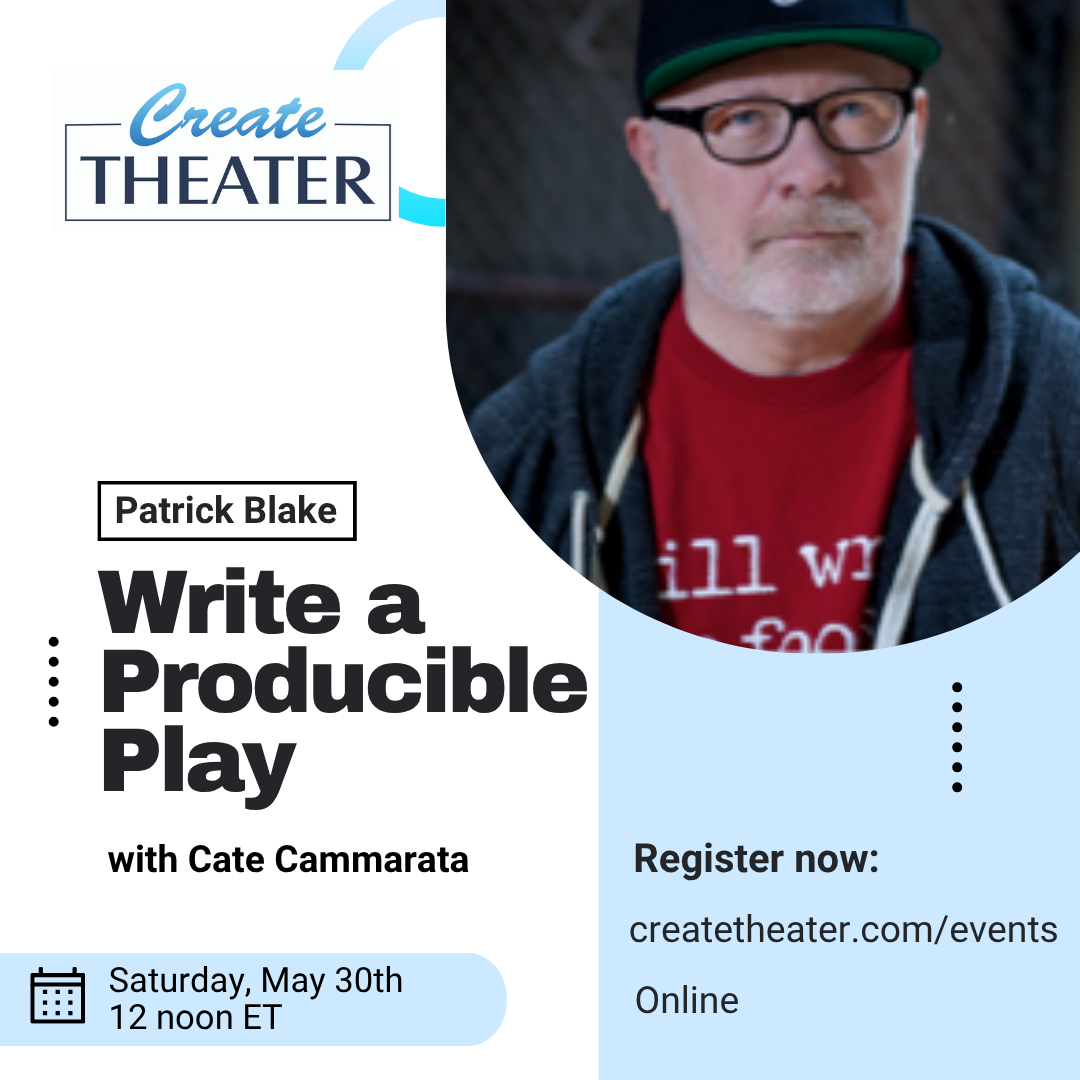
If this opened your eyes to how producers actually evaluate your script…
Then you’ll want to be in the room for our live training:
Write a Producible Play Webinar on May 30th
Off-Broadway Producer Patrick Blake and I will walk you through exactly how to check your work so it’s not just compelling, but something a producer can get on board with.