The Development Gap: When the Next Step Is Clear but the Money Isn’t

The Development Gap: When the Next Step Is Clear but the Money Isn’t

Most experienced theatermakers know that different projects need different development rooms.

A reading can help us hear structure and language.

A workshop can test staging, scene-to-song integration, transitions and theatrical storytelling.

A cabaret presentation can put songs and concept in front of an audience before an entire musical is ready to stand on its feet.

A showcase can allow more developed work to demonstrate what it might become in production.

We know this.

The harder question is increasingly not what does the work need next?

It is:

Who is going to pay for it?

That question sits underneath almost every conversation I am having about new work right now.

This month alone, I have projects in very different places in the pipeline. We recently heard Act Two of SECRETS, a play still being developed by a writer in Brisbane, Australia. We have musicals moving through cabaret development. Other projects are being prepared for our 2027 Showcase season.

In most cases, identifying the next useful developmental step isn’t particularly mysterious.

Finding the resources to make that step happen is.


The Artistic Question and the Financial Question

Ideally, development decisions would be made primarily on artistic grounds.

What does the piece need?

What question are we trying to answer?

What combination of actors, directors, musicians, designers or space would allow us to investigate it?

But every one of those questions eventually becomes a budget.

Actors need to be paid.

Rehearsal space costs money.

Musicians cost money.

Directors, music directors, stage managers, designers and producers need to be compensated.

A presentation requires a venue.

A showcase requires considerably more.

And a production requires an entirely different level of capitalization.

So the creative producer is constantly working with two parallel questions:

What does the work need?

and

What can we actually afford to give it?

Those answers are increasingly different from each other.


The Development Pipeline Has a Funding Problem

For decades, nonprofit and regional theaters have played an essential role in developing new American work.

But institutions themselves face enormous financial pressures.

When budgets tighten, risk becomes harder to justify.

A theater still has salaries, rent, insurance, production costs and audiences to maintain. A recognizable title or familiar musical may offer a far more predictable path to ticket sales than an unknown new play by a writer audiences have never heard of.

That doesn’t necessarily mean an artistic director doesn’t believe in new work.

It means belief still has to survive a budget meeting.

And that creates an increasingly difficult gap.

Writers need productions in order for their work to become known.

Theaters often need work to arrive with some degree of recognition, development or financial support before they can afford to take the risk.

Somebody has to finance the space between those two things.

Increasingly, I find myself asking:

Who?

Money Doesn’t Always Follow Merit

There is another side to this problem that we don’t talk about nearly enough.

Funding can move work forward.

But the presence of funding does not necessarily mean that the work is ready to be produced.

I’ve seen projects reach showcases and productions largely because someone had access to the money necessary to put them there.

And I’ve seen much stronger projects remain in development because those resources weren’t available.

This is not about artistic readiness.

The ability to raise money is important. Producing is impossible without it.

But capital should not become our substitute for artistic judgment.

A production with sufficient financing can rent a theater, hire actors, engage designers and buy advertising.

However, none of those things can solve a story problem.

And once a project reaches a sufficiently public stage, everyone involved has a professional stake in what is being presented.

That is one reason I have become increasingly careful about what CreateTheater puts into a showcase or production.

A showcase should not simply mean:

The writer could afford a showcase.

It should mean:

We believe this work is ready to benefit from one.

So Where Does That Leave New Work?

This is the question I don’t think our field has solved.

If the nonprofit model is increasingly financially stretched, if commercial development requires access to private capital, and if writers themselves are expected to shoulder more of the cost of developing their work, we risk creating a theater in which access to development depends too heavily on access to money.

That should concern all of us.

Because the long-term health of the theater depends upon the quality and range of the work entering the pipeline.

Margo Jones put it simply:

“Our theater can never be stronger than the quality of its plays. We must, therefore, have a great number of good plays.”

I keep coming back to that.

Jones, Nina Vance and Zelda Fichandler were among the pioneers who helped create an alternative to a theater ecology dominated by the commercial marketplace: professional resident theaters where artistic value did not have to be determined solely by whether a production could immediately make money. That movement grew with substantial philanthropic and eventually public support.

Now Oskar Eustis, one of the most prominent artistic leaders of the institutions that movement created, has said bluntly that “the American nonprofit theater movement is over.” His argument is not that nonprofit theaters will disappear, but that the national consensus that once supported serious, subsidized, non-market-driven theater has disappeared.

Maybe he’s right.

But if the movement is over, I think we have to ask a much harder question:

What happened to it?

Was it simply starved by the disappearance of public and philanthropic support?

Did escalating labor, real-estate and production costs make the original model impossible?

Does the public no longer value live, professional theater on stage?

Or, have some of our nonprofit institutions grown so large—and so expensive to sustain—that maintaining the institution itself can compete with the artistic mission it was created to serve?

Those questions become particularly uncomfortable when resources for developing new work are disappearing while leadership compensation at some of our largest nonprofit theaters can reach seven figures.

That fact alone does not explain the crisis. But it should make us willing to ask what our nonprofit theaters are funding, whom they are serving, and what we expect the word nonprofit to mean in 2026.

Because the original dream was never simply to build institutions.

It was to build a theatrical ecology in which artists could make important work that the commercial marketplace alone would not support.

If that system is truly ending, then the answer cannot simply be to return development to whomever has the deepest pockets.

Otherwise we have come full circle.

The writers who can finance their own productions will get produced. The writers with wealthy patrons or powerful connections will get developed. And excellent work without access to capital will remain on the page.

Who benefits from that pay to play model?

Which brings me back to Margo Jones.

“Our theater can never be stronger than the quality of its plays.”

If we still believe that, then perhaps the most important question facing those of us producing new work isn’t whether the old nonprofit model is over.

It is:

What are we going to build in its place—and how do we make sure artistic merit, rather than access to money, still has a chance to determine what stories we get to tell on stage?
Not sure what your project needs next?

Subscribe to The Producers Room for weekly guidance on moving new work forward.

Developing a new musical?

You Have to Produce for the World You’re In

You Have to Produce for the World You’re In

There is a point in developing a new play when the questions stop being mostly about the script.

You are no longer asking just:

Does this scene work?
Is the character clear?
Is the structure holding?
Have we earned this moment?

You start asking different questions.

Can the actor make that costume change?

Can we physically accomplish on stage what is called for on the page?

Does this scenic idea actually serve the story?

What theatrical elements does this transition require? At what expense?

And now, more and more, what is happening outside the theater that could affect the people who are working inside the theater?

As a producer, that last question has been on my mind a lot lately.

As we move The Blue Violinist Over West End Avenue toward its Off-Broadway production this fall, I have been reminded over and over again that a producer does not get to produce in an imaginary world.

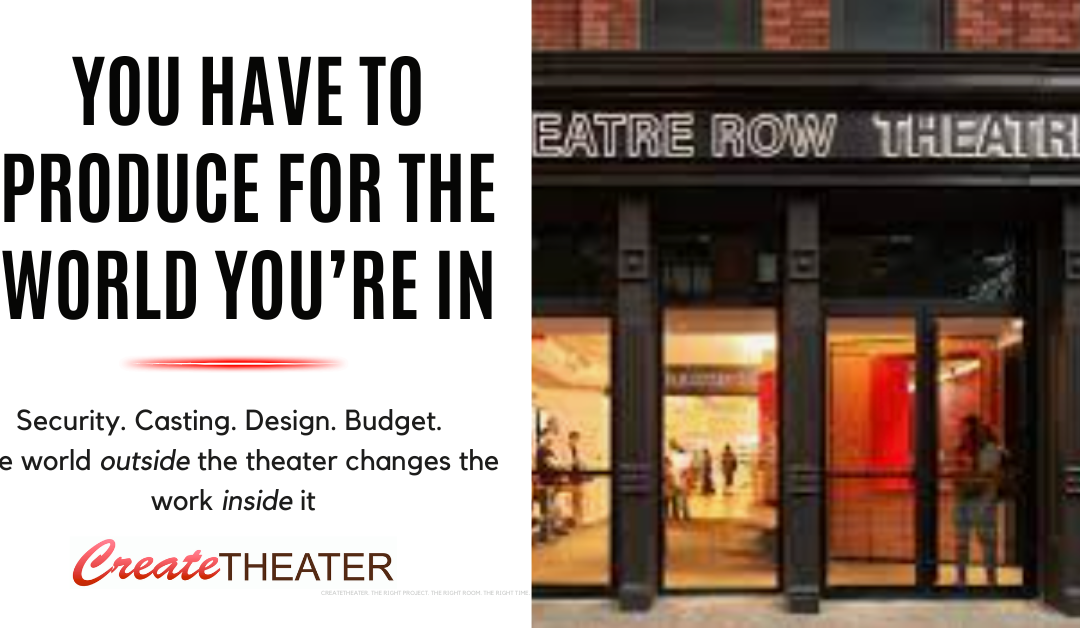
You have to produce for the world you’re in.

And the world you are in becomes part of the production, whether you want it to or not.

The Outside World Will Walk into the Room

Even though we have been working on this script for months, as we begin moving toward production, the context surrounding the  work has become impossible to ignore.

For instance, casting has been more complicated for us than any of us expected.

Not because there is a shortage of talented actors – especially in NYC, the world’s largest casting pool.

But because the subject matter of this play exists inside a very particular cultural and political moment.

Evidently, actors in another similarly-themed production dealt with social-media harassment because of the material they were performing, and word had gotten around inside the acting community.

That kind of experience does not remain abstract when you are asking actors to join your own company.

Suddenly, what might once have seemed like a straightforward casting conversation becomes something else.

How comfortable will an actor feel associating publicly with this material?

It was my responsibility as a producer to keep everyone safe.

I had already built additional layers of security into the budget, but I had to think about their entire experience. We called upon the theater to add additional security measures so that our cast and production crew would feel as safe as possible.

There are additional production questions that we need to address right now:

What needs to be added to the production budget because the world outside the theater has changed?

How do I make my team feel as safe as possible during the run of the production?

None of these questions alter the artistic reason for doing the play.

But they absolutely change the way I have to produce it.

That is part of the job.

Production changes the script, too

At the same time, something much more ordinary has been happening.

The design team has started asking practical questions.

Costume changes.

Transitions.

Physical logistics.

What can actually happen in the space.

How quickly something needs to happen.

Whether an idea that reads perfectly well on the page creates an impossible or awkward sequence in performance.

This is one of the clearest signs to me that a project has crossed an important developmental threshold.

Earlier in the process, the questions were largely about story, character, tone and intention.

Now the questions are increasingly about execution of the idea.

That does not mean the script suddenly becomes untouchable.

Quite the opposite.

This is where production reveals the final changes a script needs to make.

They are different changes.

You are no longer rewriting because you are tweaking how to tell the story better.

You are adjusting because the story now has to live inside bodies, costumes, scenery, time, space and an actual theater.

That distinction matters.

It is one of the reasons I often ask writers:

Are the remaining questions writing questions, or production questions?

That tells me where the work actually is in its development.

And then there is the audience

At the end of my long week I had a conversation with a filmmaker who is interested in maybe writing for the theater.

What interested him was the immediacy of the experience.

In film, there can be a tremendous amount of distance between creating the work and then watching an audience view it.

Theater is different.

The audience is right there in the same space with you, while you’re creating it on stage.

You know when they are with you.

You know when they are restless.

You know when something is funny because you hear the laugh.

You know when something has made people uncomfortable. and you know when

And you know when your work lands – because the tone of the room changes. .

That is part of what makes theater risky (and it’s why the Greeks eventually shut theater down).

It is also part of what makes theater matter.

A production does not simply present a story.

It puts a group of people in a room together and asks them to experience that story at the same time.

That shared experience resonates, and feels increasingly important to me.

Especially right now.

The producer’s job is larger than protecting the script

When people talk about producing, the conversation often turns quickly toward money, schedules, contracts and logistics.

Those things are certainly part of it.

But creative producing also means protecting the conditions in which the work can succeed.

That means understanding the script.

Understanding the writer as an artist.

Understanding the audience.

Understanding what the design is telling you.

Understanding the director, and what the actors need.

And understanding the world the production is about to enter.

Sometimes the world changes faster than the production does.

The producer has to notice, and has no control over that.

We shouldn’t chase every cultural shift or change the work just because someone might object to it.

Instead, it means being awake.

It means knowing what you are really asking of your collaborators.

It means anticipating the practical consequences of the choices you make, on your entire team.

And it means recognizing that once a play moves toward production, the work is no longer happening only between the writer and the page.

It is entering the world. And the world will take notice.

Development Prepares the Work for that Moment

This is one of the reasons I believe so strongly in development, and in theater itself.

A reading is not the goal.

A workshop is not the goal.

A showcase is not the goal.

Each one is a room where you can answer a different kind of question.

Eventually, though, the project has to leave the safety of development and meet the demands of production.

And at that point, the question becomes larger.

Not simply:

Does the play work?

But:

Can this play work here, with these people, for this audience, in this moment?

That is the question I am living with right now.

And I suspect it is one of the most important questions I can ask as a producer.

Because we never get to produce theater in the world we wish existed.

We have to produce in the actual world we live in.


Working on a new musical?

On September 27, CreateTheater’s next NYC Musical Development Workshop 3, Back Into the World, looks at another moment when the work has to re-enter the room: the opening of Act Two.

After intermission, your audience comes back with expectations. Your characters come back changed. Your musical has to regain momentum and make clear why we should keep following the story.

That is the work we’ll be exploring together.

Not sure what your project needs next?

Subscribe to The Producers Room for weekly guidance on moving new work forward.

Developing a new musical?

Readings Aren’t the Goal. Development is.

Readings Aren’t the Goal. Development is.

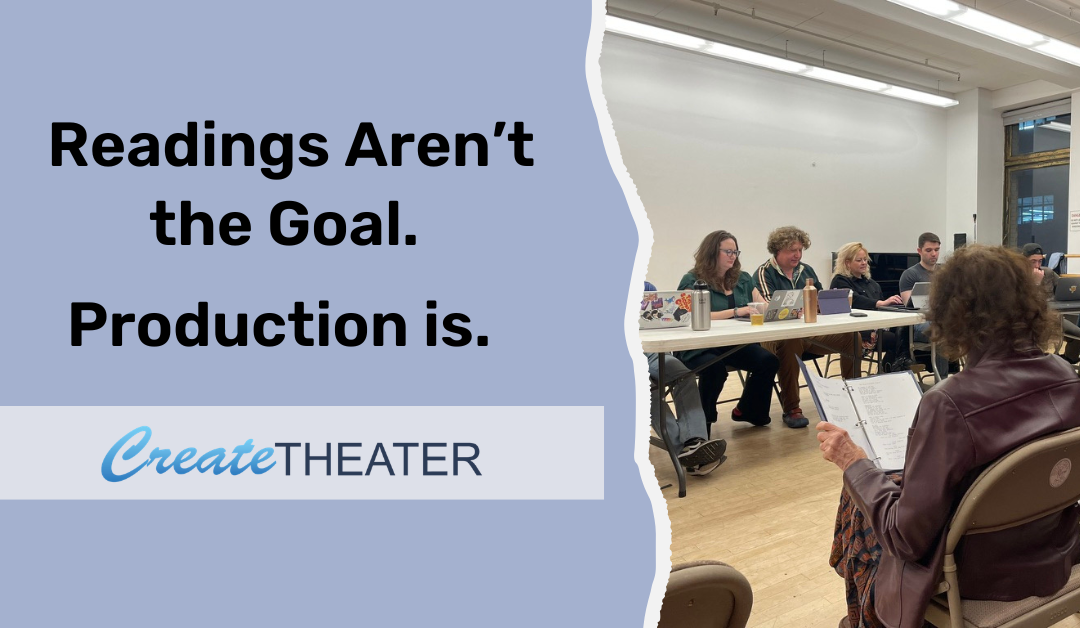
Readings Aren’t the Goal. Production Is.

Why so many playwrights get stuck in the development loop—and how to avoid it.

By Cate Cammarata

If you’re writing a new play or musical, at some point you’re going to need to put it in front of an audience.

There is simply no substitute for hearing actors speak your words out loud, seeing where an audience leans in, where they laugh, where they become restless, and where they become emotionally invested.

We need to bring an audience in to learn how the work is landing. That’s why we do readings.

Theaters and producers also need to hear information a script before they invest all the time, money, and resources required to move the script to a full production.

Readings are one of the most useful, economical and practical tools we have in the development process.

I am very much for readings.

But I think our industry has developed a problem.

Too many writers have grown to believe that development itself is the destination.

But it’s not.

Too many projects spend years moving from reading to reading, workshop to workshop, feedback session to feedback session—without ever reaching a production.

And that was never the purpose.


A Reading Is a Diagnostic Tool

Think of a reading the way a doctor thinks about an X-ray.

The X-ray isn’t the treatment.

It’s information.

The reading is not the final product.

It’s a way to discover:

  • What is working

  • What is confusing

  • What is emotionally landing

  • Where the pace drags.

  • What questions the audience is left asking it’s done.

The goal is not to accumulate readings.

The goal is to gather information on what should be addressed and revised in order to move the piece forward.

But if a project has had five readings and nothing significant is being changed – the work needs to find a way to a full production.

So then, is the work ready? It depends. What does the feedback actually say?


Not All Feedback Is Equal

One of the most important lessons I teach playwrights and musical theatre writers is this:

Always pay attention to who is giving the feedback.

Many writers collect comments from everyone in the room and treat every opinion as equally valuable.

Watch out; that could be dangerous.

Consider:

  • Is the feedback coming from a producer?

  • A literary manager?

  • A dramaturg?

  • A director?

  • An actor?

  • A regular audience member?

Each person is experiencing the work through a different lens:

  • A literary manager may identify issues that affect programming decisions.

  • A ldirector may focus on theatrical execution.

  • An actor may notice problems with character motivation.

An audience member may only know that something “felt off.”

All of those perspectives have value.

But they do not necessarily carry equal weight depending on your goals.

The key is to understand the source before deciding what to do with the information.


Listen for Patterns

One isolated comment is just one person’s opinion.

Ten versions of the same comment are data.

One person might say:

“Act Two felt slow.”

Another would admit:

“I lost focus after intermission.”

Someone trying to be helpful would share:

“I wasn’t sure what the protagonist wanted anymore.”

Or add:

“The ending felt farther away than I expected.”

Different words – but the same underlying issue.

When multiple people are pointing toward the same problem—even if they’re describing it differently—the audience is intuiting something important.

That doesn’t automatically mean they know how to fix it (although they may try to rewrite your play on the spot to “help”).

But it usually means they’re correctly identifying a symptom.

Your job is to investigate the cause.


The Audience Is Usually Right About Problems

And usually wrong about solutions.

Remember that.

An audience member may accurately identify confusion around a character’s motivation – and then they may propose a scene, a speech, or an entirely new subplot to fix it.

Now, the confusion is valuable information.

Their proposed solution? Not so much.

As the writer, your responsibility is to diagnose the underlying issue and solve it in a way that serves the piece.


Trust Your Instincts

No matter how experienced the person giving notes may be, never make a change simply because someone told you to. No matter how famous.

Every revision should pass through your own artistic judgment.

Ask yourself:

  • Does this note resonate to me?

  • Does it reveal a real problem?

  • Does it align with my vision for the piece?

  • Will it make the play stronger?

If the answer is no, don’t make the change.

The work belongs to you. The final decisions belong to you.

A professional writer learns how to listen productively without becoming obsessed by other people’s opinions.

Process every comment through your own filter: your own gut reaction to it.


Remember: It’s Your Intellectual Property

This is especially important when production opportunities enter the picture.

Sometimes a theatre, director, producer, or literary manager may request changes before agreeing to produce a script.

Those requests may be reasonable.

They may even lead to improvements.

Or – they may not.

Writers often feel trapped in these situations because production opportunities can be difficult to secure.

Unfortunatlely, I’ve seen it happen too many times.

Here’s what I remind my clients:

The work is your intellectual property.

If you choose to make adjustments to facilitate a production, that is your decision.

But the script remains yours.

You are not permanently surrendering authorship.

After the production ends, you are free to decide which – if any – of those changes belong in future drafts.

The work is yours..

The key is making intentional choices for now instead of feeling pressured into introducing permanent changes into your script. 


We Need Better Development Models

The larger issue is that our field often relies too heavily on readings as the primary development mechanism.

Readings are valuable.

They’re essential.

But they’re not enough.

Theatre is a production-based art form.

Certain discoveries only emerge when a piece is staged, designed, rehearsed, and performed in front of a paying audience over time.

The challenge, of course, is cost.

Productions require resources.

Readings are comparatively inexpensive, which is why many promising projects remain trapped in “developmental hell.”

As an industry, we need more innovative, practical, and sustainable ways to move readings into productions.

We need models that allow artists to test work in front of audiences in spaces that don’t require enormous budgets.

We need pathways that help writers move beyond endless feedback cycles and toward actual production experiences.

Those questions—and the future of developing theatre—are topics I explore regularly in my Creative Producer emails each Friday.

Because the goal isn’t another reading.

The goal is helping great plays and musicals find their way to the stage.


About CreateTheater

At CreateTheater, we help playwrights and musical theatre writers develop producible work—not just polished scripts. Through dramaturgy, development labs, strategic feedback, and production-focused guidance, we help writers move from draft to audience to production with intention.

Development is a step. Production is the destination.

Want more practical strategies for moving plays and musicals from development to production?

Every Friday, I share my Creative Producer newsletter with playwrights, musical theater writers, directors, and independent producers exploring new models for developing and producing work.

Join the list and receive weekly insights on script development, audience-building, production strategy, and creating sustainable pathways to the stage.

Why Most Theater Projects Stall

Why Most Theater Projects Stall


Why Most Theater Projects Stall


Most theater projects do not stall because the work isn’t good.

They stall because development is so difficult to sustain.

A playwright begins with excitement.
A composer starts hearing the score.
A collaborative team gathers around an idea that feels urgent and alive.

Then, slowly, the momentum fades.

The reading happens.
Feedback comes in.
People say encouraging things.

And then…

Nothing.

No next step.
No developmental strategy.
No producing support.
No sustained artistic ecosystem to mentor the work forward.

The project enters the place where many promising theater works disappear:
developmental limbo.


The Isolation Problem

Many writers spend years developing work in isolation.

Not because they want to — but because the structure of the contemporary theater industry often leaves them there.

Theater is inherently collaborative, but development has increasingly become private.

Writers revise alone.
Submit alone.
Network alone.
Attempt to produce alone.

Without sustained collaboration, it becomes difficult to maintain clarity about the work itself.

Questions begin to accumulate:

  • Is this working?
  • What audience is this really for?
  • What changes should I make?
  • Is the problem structural or is it something else?
  • Is this project producible?
  • Should I keep going with this project?

Without artistic guidance, revisions can become circular rather than forward-moving.

Many writers are not actually revising the script anymore.
They are revising to please someone else.


Feedback Is Not the Same Thing as Development

One of the biggest misconceptions in new work creation is the idea that feedback alone = development.

But receiving opinions is not the same thing as building a show.

A playwright may receive:

  • script notes
  • workshop responses
  • reactions from peers
  • coverage
  • dramaturgical comments

But unless someone is helping shape a long-term developmental process, the work can still stall.

Real development requires:

  • continuity
  • momentum
  • leadership
  • collaboration
  • producing awareness
  • audience understanding
  • artistic accountability

In other words:
development is not just about rewriting pages.

It is about sustaining movement.


Momentum Is the Most Important Resource

The greatest threat to new theatrical work is not failure.

It is inertia.

A project loses momentum when:

  • there are no deadlines
  • no collaborators
  • no producing pathway
  • no developmental milestones
  • no audience engagement
  • no ecosystem carrying the work forward

And momentum matters because theater is not created with just one one step.

The strongest projects evolve through sustained interaction between:

  • writers
  • directors
  • dramaturgs
  • performers
  • producers
  • audiences

Without movement, even strong projects begin to psychologically disappear for the artists creating them.

Theater history is filled with extraordinary unfinished, unproduced, or abandoned work — not because the stories lacked value, but because development requires infrastructure.

And infrastructure is expen$ive.


The Economics of Development

There are more good stories than the theater industry currently has the capacity to produce.

That is the reality every developmental company confronts.

The cost of producing theater right now – anywhere – is extraordinarily high.
Institutional risk is real.
Commercial production requires enormous capital.
Nonprofit theaters operate with limited resources and shrinking margins.

Which means many worthy projects never receive any sustained developmental investment.

This is why artistic support matters so deeply.

Not every project will receive a full production immediately.

But every artist deserves:

  • serious development
  • collaboration
  • momentum
  • community
  • producing literacy
  • audience connection
  • a pathway forward


What Development Could Be

At its best, theatrical development is not simply script improvement.

It is the creation of conditions where artists and projects can continue evolving toward audiences.

That requires more than workshops.

It requires sustained ecosystems supporting new theatre.

Spaces where:

  • writers build long-term relationships
  • producers engage early
  • dramaturgy provides strategy
  • projects are developed sustainably
  • momentum is protected
  • artists are not isolated

This is our philosophy behind CreateTheater’s development programs.

We believe new work deserves:

  • sustained artistic support
  • collaborative infrastructure
  • dramaturgical guidance
  • producing insight
  • and meaningful pathways toward presentation

Because while not every project can immediately move to full production, every serious artist deserves the opportunity to continue growing their work in community.


Developing the Work in Community

Theater does not move forward in isolation, alone.

It moves forward through sustained development, collaboration, and momentum.

At CreateTheater we’re working toward helping develop the work and then, when it’s ready, creating the pathways forward. Collaboratively.

At CreateTheater, we believe development should lead somewhere.

Our flagship programs are built around long-term artistic growth, dramaturgical support, and industry presentations & productions.

This month, we’re launching:

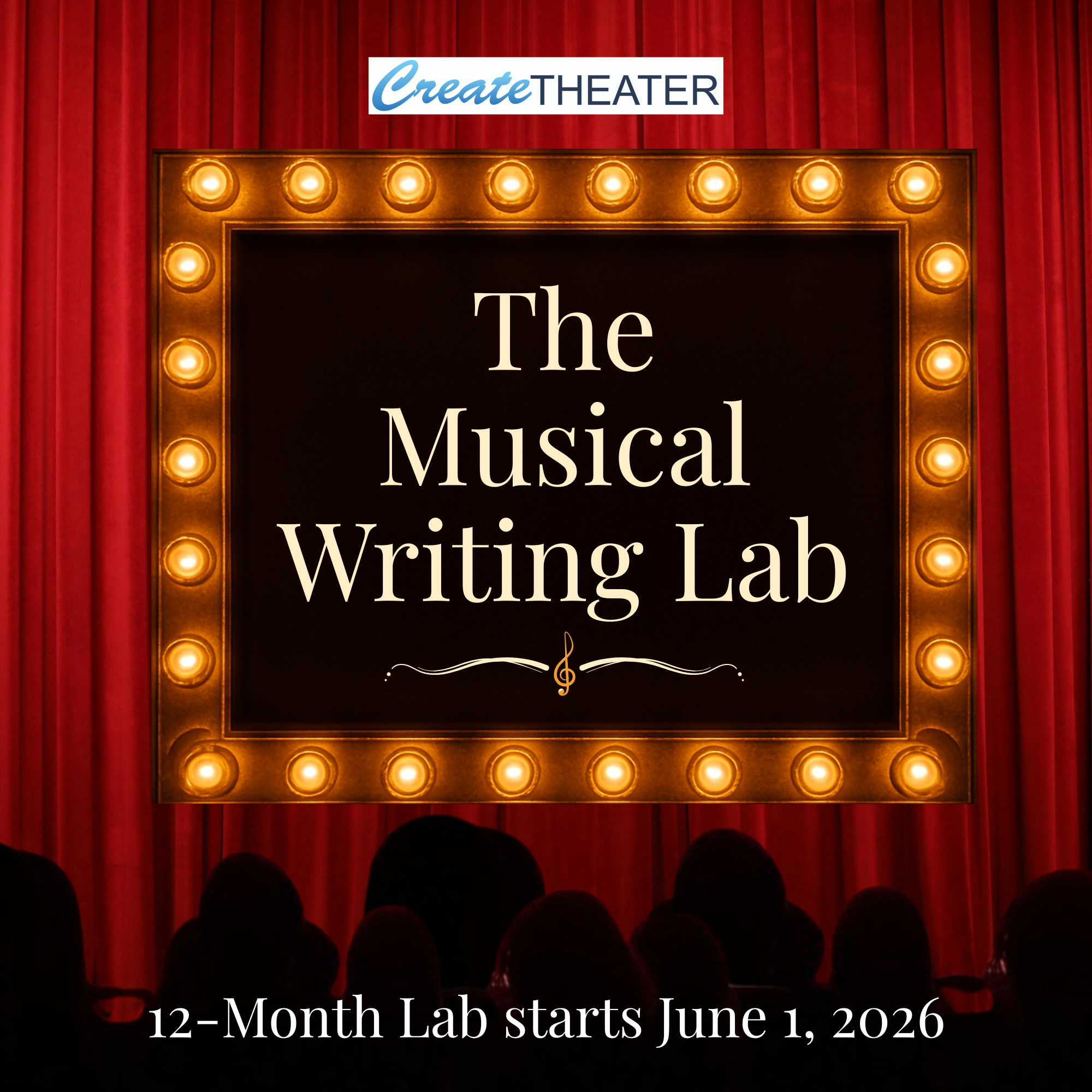
The 12-Month Musical Writing Lab

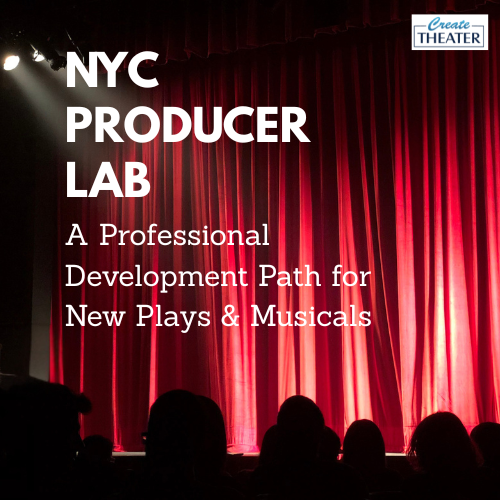
The 12-Month NYC Producer Lab

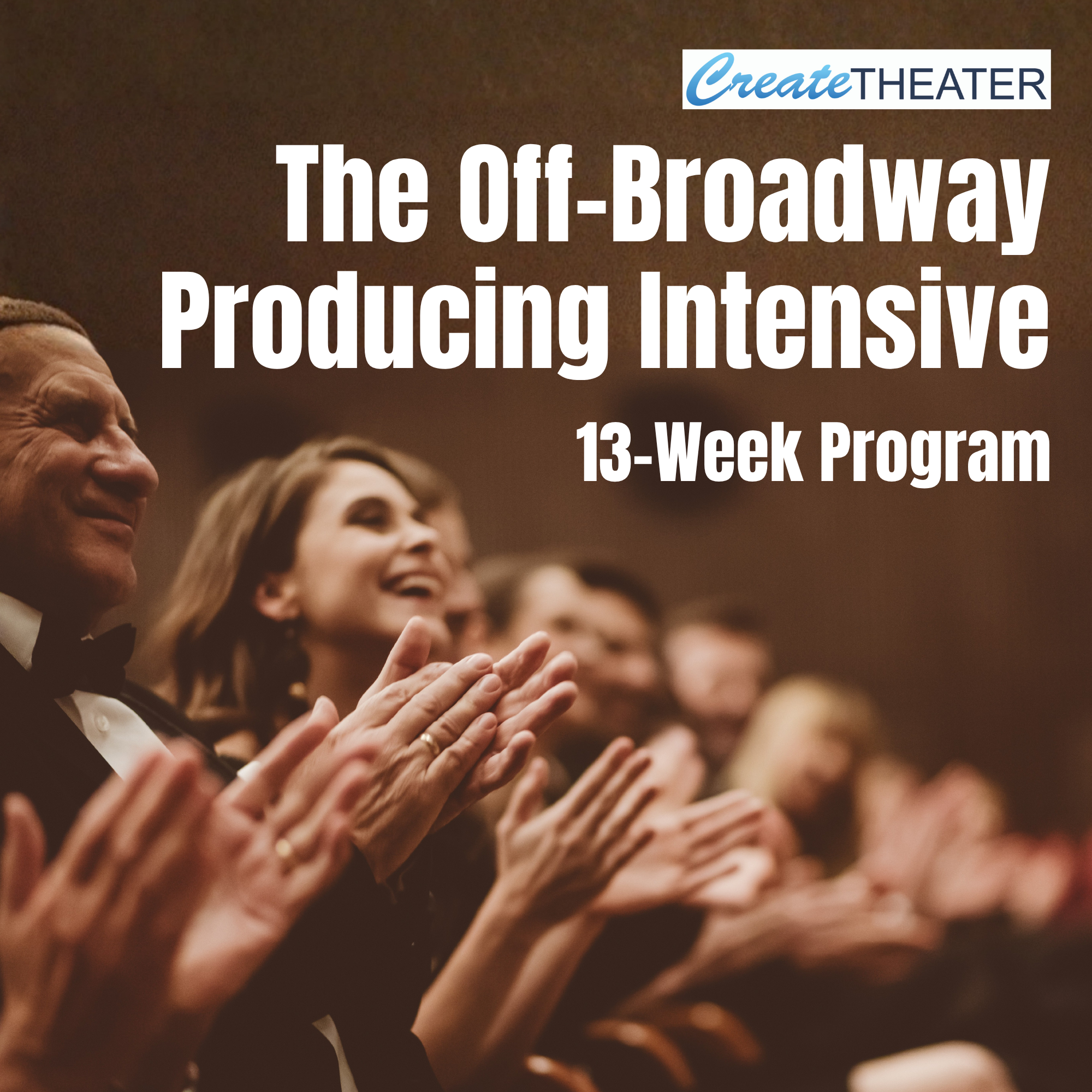
The Off-Broadway Producer Intensive

If you’re ready to move your project forward, make sure you sign up before the end of June.

Stay in the loop with our upcoming workshops!
If Your Play Isn’t Moving Forward, Read This

If Your Play Isn’t Moving Forward, Read This

If Your Play Isn’t Moving Forward, Read This

There’s a moment almost every playwright hits.

You’ve revised the script.
You’ve gotten feedback.
Maybe you’ve even done a reading.

And then…

Nothing.

No momentum.
No next step.
No production.
No real traction.

So you start wondering if the problem is the industry.
Or the timing.
Or whether theater is just impossible right now.

But after years working with new plays and musicals in New York, I can tell you something difficult — and liberating:

Most scripts don’t stall because the writer isn’t talented.

They stall because the work isn’t yet producible.

And those are two very different things.

A lot of writers are creating plays as literary documents.

But theater isn’t literature.

Theater is a live event that requires:
actors,
directors,
designers,
producers,
money,
space,
audience buy-in,
and a reason to exist right now.

That doesn’t mean your work has to be commercial.
It doesn’t mean it has to be safe.
And it definitely doesn’t mean you should write to trends.

But it does mean your script has to understand the realities of production.

Can a director envision this onstage?
Can actors emotionally land inside it?
Can an audience track the dramatic engine?
Does the structure create momentum?
Does the play know what experience it’s trying to create in the room?

These are producing questions.
And they are creative questions.

I think this is the missing conversation in a lot of playwright education.

Writers are taught how to write scenes.
But not how to build theatrical experiences people want to champion.

And honestly?
That’s where careers begin to shift.

Because once your work becomes producible, people can suddenly move with it.

Producers lean in.
Directors see possibilities.
Collaborators want to attach themselves.
Readings lead to workshops.
Workshops lead to productions.

Momentum becomes easier because the work itself generates momentum.

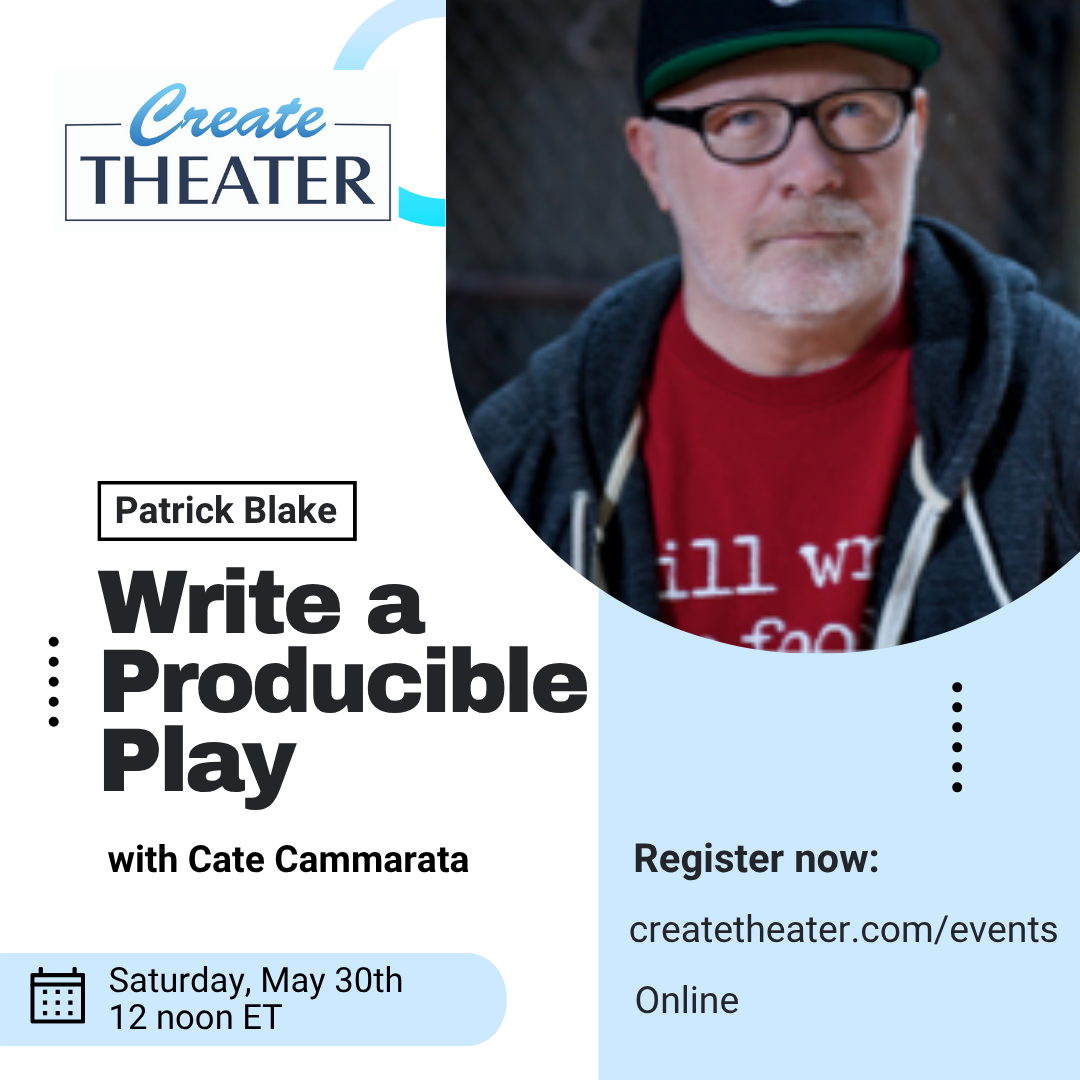
This week, I’m teaching a free webinar called Write a Producible Play because I think too many talented writers are stuck in development limbo without understanding why.

We’re going to talk about:

  • why some plays move forward while others stall
  • the structural mistakes that quietly kill momentum
  • how producers evaluate new work
  • and how to develop your script with production in mind without sacrificing your artistic voice

Because your play does not need to become smaller.

It needs to become stage-ready.

And those are not the same thing.

If your work has felt stuck lately, this webinar is for you.

Let’s get your play moving again.

If this opened your eyes to how producers actually evaluate your script…

Then you’ll want to be in the room for our live training:

Write a Producible Play Webinar on May 30th

 Off-Broadway Producer Patrick Blake and I will walk you through exactly how to check your work so it’s not just compelling, but something a producer can get on board with.

Stay in the loop with our upcoming workshops!