
Why Most Plays Don’t Get Produced (And What To Do About It)
There’s a persistent myth in the theater world: that good work rises to the top.
It’s comforting. It’s also incomplete.
Because if you’ve spent any time developing new work, you already know the truth: plenty of good plays never get produced. Not because they aren’t worthy—but because they’re not yet producible.
And that gap matters.
If your goal is production (not just expression), you need to understand what’s actually standing in the way.
Here are five of the most common reasons I’ve found that plays stall—and what you can do about each one.
1. Your Play Needs More Development
This is the big one.
Most plays don’t get produced because they’re simply not ready yet.
Not “bad.” Not “broken.” Just underdeveloped.
Maybe the structure isn’t landing.
Maybe the central action isn’t clear.
Maybe the ending doesn’t deliver on the promise of the premise.
From the outside, it might feel done. But from a producer’s perspective, it still requires too much work to justify the risk.
What to do:
Stop thinking in terms of “finished” and start thinking in terms of functioning.
- Does the play land consistently with an audience?
- Are the stakes clear and escalating?
- Does it deliver a cohesive theatrical experience?
If not, the next step isn’t submission—it’s development. Workshops. Readings. Targeted rewrites.
This is where most producible plays are actually made.
2. Your Show Is Too Big (For Where You Are Right Now)
Scale kills more projects than quality ever will.
A 15-person cast. Multiple locations. Complex tech. Challenging casting requirements.
That might be the right version of your piece someday—but if it requires a level of funding that doesn’t yet exist, it becomes very hard to interest a producer to sign on now.
Especially in early stages, most investors and producing organizations are looking for something they can mount efficiently. They want a clear path to a return (artistic, financial, or reputational), and they want it soon.
Long, expensive development processes – while absolutely necessary – are a much harder sell.
Which is admittedly difficult on the writers, I know.
What to do:
Ask yourself a hard question:
- Can this piece exist in a smaller, more producible form right now?
- Can the cast be reduced?
- Can the world be simplified?
- Can the storytelling carry the weight without expensive elements?
This isn’t about compromising your vision. It’s about creating an entry point for the piece to initially get on its feet.
3. Your Story Is Too Personal (And Not Yet Universal)
“Write what you know” is good advice—until it isn’t.
A story that is deeply personal can be powerful. But if it stays only personal, it often doesn’t translate.
Producers aren’t just asking, “Is this meaningful to the writer?”
They’re asking, “Will an audience see themselves in this?”
If the piece doesn’t connect to a broader human experience—love, loss, ambition, identity, belonging—it becomes harder to program, market, and ultimately produce.
What to do:
Interrogate the core of your piece:
- What is this really about?
- What human question is it asking?
- Where does the audience enter the story?
You don’t need to dilute your voice. You need to frame it so the audience can find themselves inside it.
This is a big one that many writers miss.
4. There Are No “Big Names” Attached
This one is less about art and more about reality.
Recognizable names—actors, directors, producers—reduce perceived risk. They help sell tickets. They attract investors. They signal credibility.
Without them, your project has to work harder to prove itself.
That doesn’t mean you can’t get produced. It means the package matters more.
What to do:
If you don’t have big names, build strength elsewhere:
- A clear, compelling concept
- A strong track record of development (readings, labs, workshops), or your own stong writing record.
- A passionate, aligned team that is on board with your show.
- Evidence that the piece lands with audiences. (Again, this is big – proof of concept.)
Momentum can substitute for notoriety—but you have to create it intentionally.
5. You Don’t Have the Relationships (Yet)
Theater is collaborative—and relational. This is an industry driven by personal relationships.
Most opportunities don’t come from cold submissions. They come from conversations, recommendations, and ongoing professional relationships.
If producers don’t know you—or don’t know your work—it’s much harder for them to take a chance on you.
It’s much harder to get them to come to readings, or to read your submission.
What to do:
Shift from “submission mode” to “relationship-building mode.”
- Attend readings, galas and other industry events
- Support other artists’ work
- Build genuine connections over time
- Stay in touch with others in the industry. You never know where someone you know will go.
This isn’t about networking in a transactional way. It’s about becoming part of the professional theater community where work actually gets made.
The Real Shift: From “Good” to “Producible”
Here’s the throughline:
Most plays don’t get produced because they lack merit—but because they’re not yet aligned with the realities of production.
That alignment includes:
- Craft (a fully functioning script)
- Scale (a feasible production model)
- Story (a clear, resonant core)
- Package (elements that reduce risk)
- Relationships (pathways into the field)
When those elements come together, things start to move.
Final Thought
If your play isn’t getting produced, the question isn’t:
“Is this good enough?”
It’s:
“What is this play missing to become producible?”
That’s a far more useful—and actionable—question.
CTA
If you’re ready to move your work from draft to production-ready, the next step is focused development.
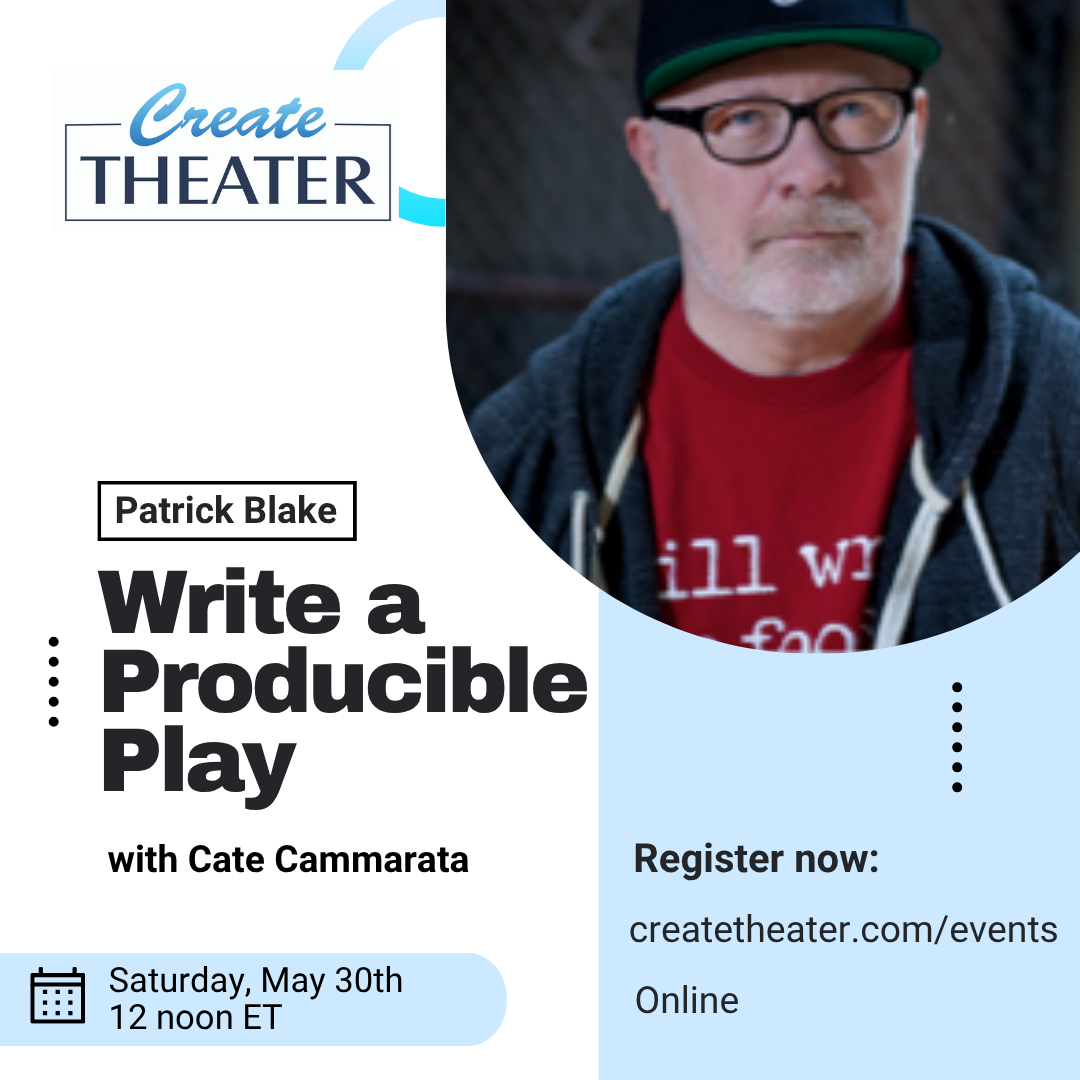
My Write a Producible Play Lab on May 30th with Off-Broadway producer Patrick Blake is designed to help you:
- Clarify your story engine
- Strengthen structure and stakes
- Shape a piece that lands with an audience—and a producer
→ Applications are open now.
If this opened your eyes to how producers actually evaluate your script…
Then you’ll want to be in the room for our live training:
Write a Producible Play Webinar on May 30th
Off-Broadway Producer Patrick Blake and I will walk you through exactly how to check your work so it’s not just compelling, but something a producer can get on board with.
Stay in the loop with our upcoming workshops!