You Cannot Wait Until Opening Night to Find Your Audience
Build the audience while you’re still building the show.
We’re moving The Blue Violinist Over West End Avenue into Theatre Row this week, and as we prepare for previews beginning October 27, I’m thinking about something that every writer and producer developing new work needs to understand.
A great show doesn’t automatically find its audience.
You can spend years developing a script, refining its characters, strengthening its structure, assembling a wonderful creative team, and creating a beautiful production.
But who is going to come see it?
That’s a producing question. And it’s one that needs to be asked long before opening night.
One of my most consistent pieces of advice to writers developing new plays and musicals is this: Build the audience while you’re still building the show.
We’re putting that principle to work right now with The Blue Violinist Over West End Avenue.
Who Is This Show Really For?
Every new production needs to identify its core audiences.
And no, “everyone who loves theater” isn’t specific enough.
The Blue Violinist Over West End Avenue takes place on Manhattan’s Upper West Side. It’s a story about family, faith, identity, inheritance, and the ways generations negotiate the traditions they receive.
Inspired by the spirit of Fiddler on the Roof, the play explores questions that are both culturally specific and deeply human.
So when we began developing our audience strategy, we had several natural starting points.
First, New Yorkers—particularly audiences on the Upper West Side. The play is rooted in a recognizable neighborhood and a particular cultural world. That specificity is an asset.
Second, people who love art, theater, and cultural experiences. These are audiences who seek out new theatrical work because they enjoy participating in New York’s cultural life.
And third, audiences with a connection to Jewish culture, history, and storytelling, who may recognize something particularly meaningful in the play’s exploration of family, tradition, and identity.
These groups overlap, of course. And they are starting points, not limits on who might connect with the production.
But identifying them gives us something concrete to build upon.
What Our Marketing Is Teaching Us
We’re fortunate to be working with an excellent marketing company, Table 7, which is developing and executing our social media and audience-building strategy.
One of the most interesting parts of this process has been examining who’s actually responding to our marketing.
Among the states where we’re seeing engagement, New York leads by a significant margin.
That’s not surprising. We’re presenting an Off-Broadway play in New York City, with a setting that many local theatergoers know intimately.
But the second most engaged state is California, followed by Florida, Texas, and New Jersey.
That’s interesting.
It suggests that the show’s reach extends beyond its immediate geographic market. We may be reaching people who travel to New York for theater, have personal connections to the city, or identify with the cultural and thematic world of the play.
We can’t know all of that from engagement data alone. But we can begin asking better questions.
And that information may eventually help us think about regional interest, future producing relationships, and the show’s potential life beyond this production.
Audience research isn’t simply about confirming who you think your audience is. It’s about discovering who is actually responding—and why.
Sometimes the Artwork Tells You Something
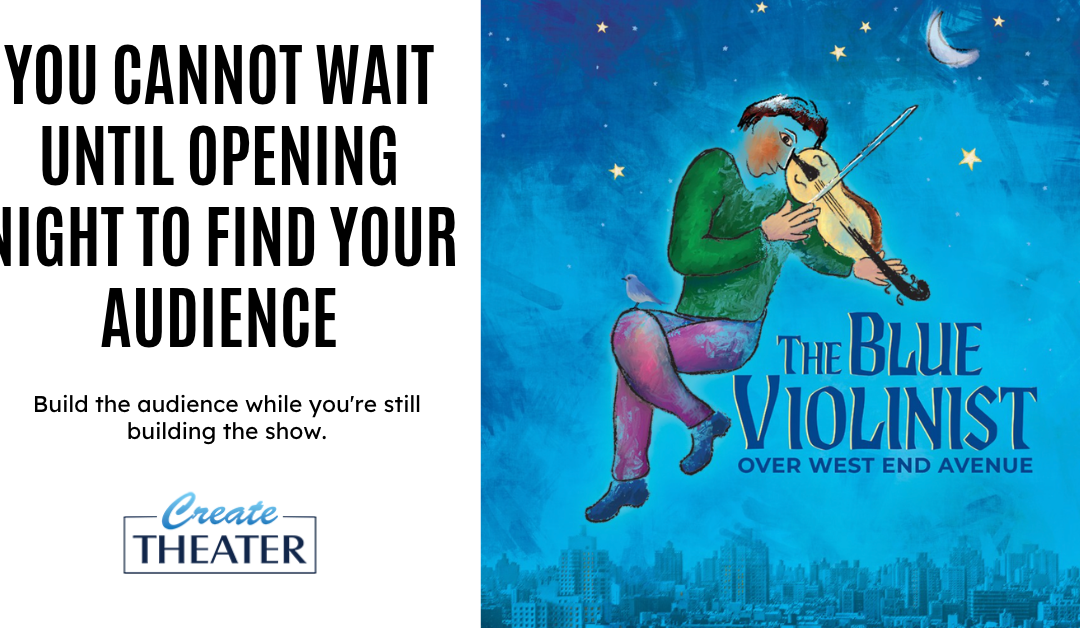
Another fascinating discovery has been the response to our production artwork.
Our visual identity was inspired by Marc Chagall’s print The Blue Violinist. We’re finding that images drawing on this visual world are generating especially strong engagement.
That gives us another clue.
The play may be appealing not only to traditional theatergoers but also to people who are drawn to visual art, cultural history, and the broader experience of participating in the arts.
I sometimes call these people our “culture vultures”—the people who love museums, galleries, theater, music, and cultural events. They don’t necessarily distinguish sharply between art forms. They’re attracted to experiences that engage their imagination.
That’s a potentially valuable audience for a new play.
It also tells us something about how the work is being discovered.
The artwork may be the first point of connection. Someone is attracted to the image before they know the story, recognize the playwright, or understand the production.
Of course, social media engagement doesn’t prove someone’s educational level, income, or likelihood of purchasing a ticket. Those questions require additional research.
But engagement patterns can give a marketing team useful signals about interests and potential audience segments.
And those signals can help us make more informed decisions about advertising, messaging, and where to invest our marketing dollars.
Rather than advertising indiscriminately, we can test which images, messages, locations, and audience groups are generating meaningful interest—and, ultimately, ticket purchases.
Make the World of Your Play Specific
Here’s where I think audience development and artistic development become especially interesting.
I’ve been advising writers in our CreateTheater development rooms to make the world of their plays and musicals more specific.
Where does the story take place?
Not just which city, but which neighborhood?
What streets do these characters walk down? Where do they shop? Where do they eat? What businesses and landmarks are part of their everyday lives?
What cultural assumptions do they share?
What history lives in that place?
These details aren’t simply decorative.
They help create a world that audiences recognize and believe.
When someone hears the name of a neighborhood they know, a restaurant they’ve visited, or a street they’ve walked down, something happens.
They locate themselves inside the story.
They recognize the world.
And sometimes, that recognition gives them a stronger emotional connection to the characters.
That doesn’t mean a play should become a collection of local references. Every detail should serve the storytelling.
But specificity can create universality.
A play that tries to be about everyone often ends up feeling as though it belongs nowhere.
A play that confidently inhabits a particular world can invite audiences from many different backgrounds to enter it.
And from a producing perspective, that specificity gives us natural places to begin building relationships.
Marketing Is More Than Buying Advertising
Paid advertising is important, particularly when you’re trying to reach audiences beyond your existing professional network.
But advertising alone isn’t an audience-development strategy.
As producers, we also need to think about personal outreach, community relationships, partnerships, and the networks that can help a new work find its audience.
For The Blue Violinist, that means considering connections with Upper West Side communities, cultural organizations, people interested in Jewish stories and heritage, visual arts audiences, and theater professionals who might connect with the work.
It also means personally inviting people.
I think producers sometimes underestimate the importance of this.
A personal invitation from someone who believes in a production can carry more weight than another advertisement in someone’s feed.
And when we’re thinking about the longer life of a new play, we should also be thinking about relationships with artistic directors, regional theaters, producers, and other organizations that may have an interest in the work.
One Off-Broadway production isn’t necessarily the end of the journey.
It’s potentially the beginning of another.
Your Email List Is Part of the Production’s Future
There’s another audience-development tool that frequently gets overlooked: the email list.
Social platforms are useful for discovery, but the people who encounter your work there may not see your next post.
An email list gives interested audiences a way to stay connected.
And that relationship can begin long before tickets go on sale.
A workshop, reading, cabaret, or developmental presentation can introduce people to a project and invite them to follow its progress.
Over time, these relationships can become extraordinarily valuable.
Not simply because they may eventually buy tickets, but because they have a growing investment in the work.
The same principle applies to producers, theater companies, and writers.
If you’re developing a show, you should also be developing a way to remain in touch with the people who care about it.
The Producer’s Responsibility
As a creative producer, I spend a great deal of time thinking about how to move a project from one stage of development to the next.
Does it need another reading?
A workshop?
A showcase?
Is it ready for professional production?
But there’s another question that belongs alongside all of those:
Are we building the audience that will help give this work a future?
That question affects development, marketing, producing relationships, budgets, and the opportunities we pursue.
And it should influence the conversations we’re having with our creative teams long before opening night.
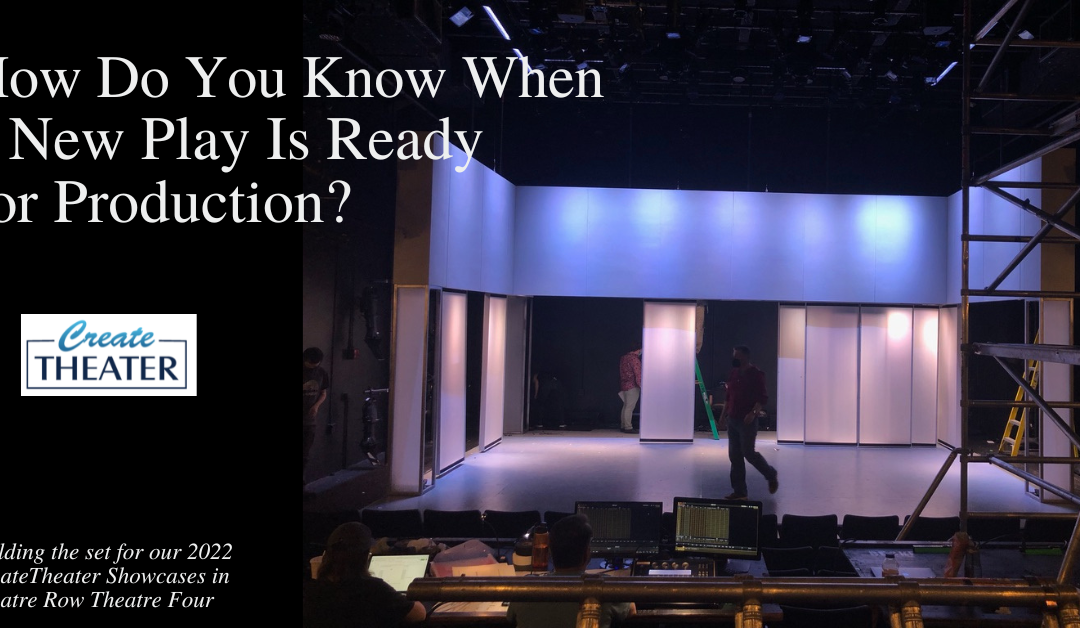
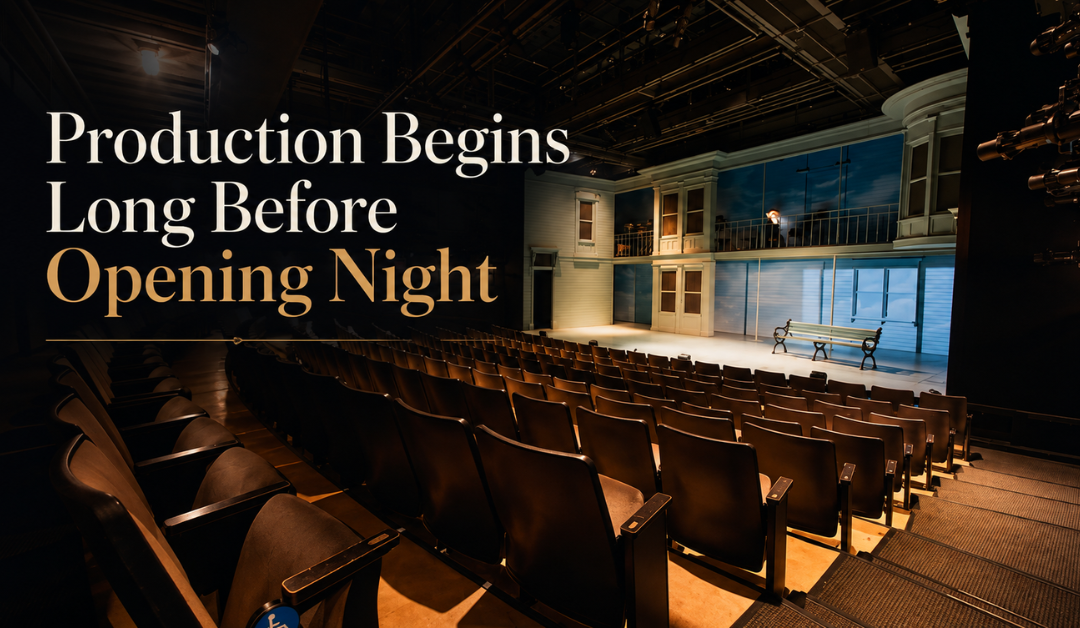
This week at Theatre Row, we’re bringing the physical production of The Blue Violinist Over West End Avenue together.
Our marketing team at Table 7 is continuing to refine how we reach and engage our audiences.
We’re learning which images resonate, which geographic markets are responding, and which communities may have a particular connection to the story.
We’re continuing to make personal connections and invite people to experience the work.
In other words, we’re building two things at once.
The production onstage—and the audience who will experience it.
Because a great show doesn’t automatically find its audience.
Someone has to build the bridge.
Come See the Work
The Blue Violinist Over West End Avenue begins previews October 27 at Theatre Row in New York City.
If you’re interested in new theater, family stories, cultural identity, and the questions we inherit from one generation to the next, I hope you’ll join us.
Get tickets: https://blueviolinistplay.com
Follow the Producing Process
Want more practical insights into how new plays and musicals move from development to professional production?
Join The Producers Room, CreateTheater’s newsletter for writers, producers, and theater artists who want to understand how new work moves forward.
Build the audience while you’re still building the show.
— Cate Cammarata
Creative Producer, Director & Artistic Director
CreateTheater