
Why Most Theater Projects Stall
Most theater projects do not stall because the work isn’t good.
They stall because development is so difficult to sustain.
A playwright begins with excitement.
A composer starts hearing the score.
A collaborative team gathers around an idea that feels urgent and alive.
Then, slowly, the momentum fades.
The reading happens.
Feedback comes in.
People say encouraging things.
And then…
Nothing.
No next step.
No developmental strategy.
No producing support.
No sustained artistic ecosystem to mentor the work forward.
The project enters the place where many promising theater works disappear:
developmental limbo.
The Isolation Problem
Many writers spend years developing work in isolation.
Not because they want to — but because the structure of the contemporary theater industry often leaves them there.
Theater is inherently collaborative, but development has increasingly become private.
Writers revise alone.
Submit alone.
Network alone.
Attempt to produce alone.
Without sustained collaboration, it becomes difficult to maintain clarity about the work itself.
Questions begin to accumulate:
- Is this working?
- What audience is this really for?
- What changes should I make?
- Is the problem structural or is it something else?
- Is this project producible?
- Should I keep going with this project?
Without artistic guidance, revisions can become circular rather than forward-moving.
Many writers are not actually revising the script anymore.
They are revising to please someone else.
Feedback Is Not the Same Thing as Development
One of the biggest misconceptions in new work creation is the idea that feedback alone = development.
But receiving opinions is not the same thing as building a show.
A playwright may receive:
- script notes
- workshop responses
- reactions from peers
- coverage
- dramaturgical comments
But unless someone is helping shape a long-term developmental process, the work can still stall.
Real development requires:
- continuity
- momentum
- leadership
- collaboration
- producing awareness
- audience understanding
- artistic accountability
In other words:
development is not just about rewriting pages.
It is about sustaining movement.
Momentum Is the Most Important Resource
The greatest threat to new theatrical work is not failure.
It is inertia.
A project loses momentum when:
- there are no deadlines
- no collaborators
- no producing pathway
- no developmental milestones
- no audience engagement
- no ecosystem carrying the work forward
And momentum matters because theater is not created with just one one step.
The strongest projects evolve through sustained interaction between:
- writers
- directors
- dramaturgs
- performers
- producers
- audiences
Without movement, even strong projects begin to psychologically disappear for the artists creating them.
Theater history is filled with extraordinary unfinished, unproduced, or abandoned work — not because the stories lacked value, but because development requires infrastructure.
And infrastructure is expen$ive.
The Economics of Development
There are more good stories than the theater industry currently has the capacity to produce.
That is the reality every developmental company confronts.
The cost of producing theater right now – anywhere – is extraordinarily high.
Institutional risk is real.
Commercial production requires enormous capital.
Nonprofit theaters operate with limited resources and shrinking margins.
Which means many worthy projects never receive any sustained developmental investment.
This is why artistic support matters so deeply.
Not every project will receive a full production immediately.
But every artist deserves:
- serious development
- collaboration
- momentum
- community
- producing literacy
- audience connection
- a pathway forward
What Development Could Be
At its best, theatrical development is not simply script improvement.
It is the creation of conditions where artists and projects can continue evolving toward audiences.
That requires more than workshops.
It requires sustained ecosystems supporting new theatre.
Spaces where:
- writers build long-term relationships
- producers engage early
- dramaturgy provides strategy
- projects are developed sustainably
- momentum is protected
- artists are not isolated
This is our philosophy behind CreateTheater’s development programs.
We believe new work deserves:
- sustained artistic support
- collaborative infrastructure
- dramaturgical guidance
- producing insight
- and meaningful pathways toward presentation
Because while not every project can immediately move to full production, every serious artist deserves the opportunity to continue growing their work in community.
Developing the Work in Community
Theater does not move forward in isolation, alone.
It moves forward through sustained development, collaboration, and momentum.
At CreateTheater we’re working toward helping develop the work and then, when it’s ready, creating the pathways forward. Collaboratively.
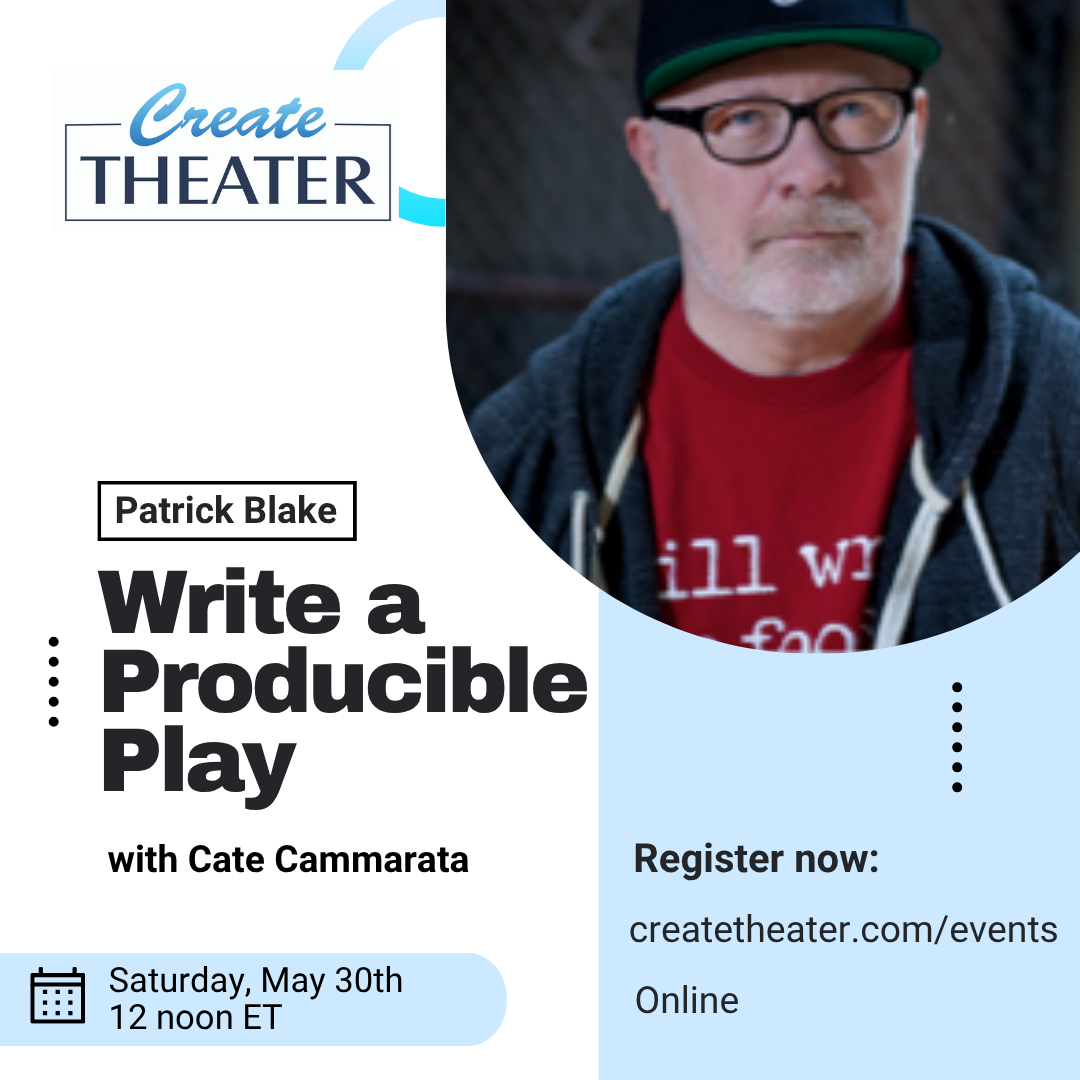
If this opened your eyes to how producers actually evaluate your script…
Then you’ll want to be in the room for our live training:
Write a Producible Play Webinar on May 30th
Off-Broadway Producer Patrick Blake and I will walk you through exactly how to check your work so it’s not just compelling, but something a producer can get on board with.