
What Makes a Play Producible
Every playwright wants the same magical sentence:
“I want to produce your play.”
But here’s the truth nobody tells you:
A producer is not just evaluating your script.
They’re evaluating:
- whether they can afford your script,
- whether they can market your script,
- whether audiences will buy tickets to your script,
- and whether you are someone they actually want to work with for the next several years.
That’s the real game.
In a recent CreateTheater webinar, Off-Broadway producer Patrick Blake broke down what producers are actually thinking when they read a play or musical.
And honestly? Every playwright should hear this before sending their next script out.
Because producibility is not about “selling out.”
It’s about understanding how theater actually gets made.
A Producer Is Asking Three Questions
Patrick said it best:
A playwright has to:
- Find a producer
- Get a producer to want to produce the show
- Get a producer to want to work with them
That’s it.
That’s the whole ecosystem.
Most writers only focus on #1.
But #2 and #3 are often where plays die.
First: Is the Story Worth Producing?
This sounds obvious, but producers are still human beings first.
They have to love the piece.
Patrick talked about reading scripts he adored artistically — but ultimately passed on because the economics didn’t make sense.
And here’s the important nuance:
A producer does not need your play to be “commercial” in the Broadway sense.
But they do need to believe:
- it can find an audience,
- it can sustain a run,
- or it can advance the theater/company’s mission.
That means your play needs:
- a compelling story,
- active characters,
- a strong structure,
- clear stakes,
- and something emotionally or culturally fresh.
Not “perfect.”
Just undeniable.
Producers Think in Salaries
This part of the webinar made everyone laugh — because it’s painfully true.
Patrick said:
“Writers think in characters. Producers think in salaries.”
A playwright sees:
- two children,
- a dog,
- a chorus,
- and a musician onstage.
A producer sees:
- union contracts,
- insurance,
- payroll,
- pensions,
- overtime,
- and replacement costs.
That doesn’t mean you shouldn’t write ambitiously.
It means you should understand what your ambition costs.
One of Patrick’s examples was a play set in a monastery library with a beautiful spiral staircase leading to a second level.
Only one actor used it.
Once.
The playwright insisted on keeping it because:
“It looks cool.”
The producer passed.
Why?
Because “cool” costs money.
The staircase meant:
- more construction,
- higher insurance,
- more risk,
- and a bigger budget.
And none of it fundamentally served the story.
That’s the difference between theatrical imagination and producible execution.
Big Difference: Necessary vs. Expensive
This is where playwrights often get defensive.
But the real question is:
Does this element deepen the storytelling?
Or…
Is it there because you’re attached to the image?
That distinction matters.
Producers are constantly calculating:
- Can this recoup?
- Can this tour?
- Can this fit into a regional theater?
- Can this be mounted Off-Broadway?
- Is there a simpler way to achieve the same emotional effect?
That doesn’t mean “write small.”
It means:
make every expensive choice earn its existence.
The Best Writers Know How to Take Notes
This was one of the most important parts of the conversation.
Patrick and the group talked about playwrights who refuse every adjustment, every production consideration, every logistical concern.
And here’s the hard truth:
That reputation spreads.
Fast.
The writers who keep getting produced are not necessarily the writers who say “yes” to everything.
They’re the writers who stay collaborative.
A producer wants to feel:
- you can solve problems,
- you can adapt,
- you can communicate,
- and you won’t become impossible once rehearsals begin.
One of the best phrases mentioned in the webinar was:
“I’ll think about that.”
Not defensive.
Not reactive.
Not precious.
Just open.
That openness keeps conversations alive.
Find the Right Producer
This was another huge takeaway.
Most playwrights submit blindly.
But producers specialize.
A producer who develops experimental immersive work is different from:
- a regional theater artistic director,
- a Broadway commercial producer,
- an Off-Broadway nonprofit,
- or a family theater company.
Patrick recommended researching:
- Tony nominees,
- theaters producing similar work,
- and producers already developing projects in your lane.
In other words:
stop pitching horror musicals to children’s theaters.
Find alignment.
Then build relationships before making asks.
That’s how theater actually works.
Relationships Matter More Than You Think
Theater is deeply relational.
Patrick talked about how playwrights often approach artistic directors with:
“Here’s my script.”
But the stronger approach is:
“How can I help?”
Volunteer.
Attend readings.
Support other artists.
Be part of the ecosystem before expecting the ecosystem to support you back.
People produce work by people they trust.
That’s not cynical.
That’s theater.
Attachments Only Help If They Actually Help
This section was fascinating.
Writers love attaching:
- directors,
- actors,
- dramaturgs,
- collaborators.
But attachments are only valuable if they:
- help raise money,
- help sell tickets,
- or help attract industry attention.
A famous actor? Helpful.
Your cousin who “really gets the play”? Less helpful.
That doesn’t mean don’t collaborate.
It means understand the producer’s perspective.
Every attachment changes the equation.
Sometimes positively.
Sometimes not.
Social Media Matters Now
Patrick made a point that every playwright needs to hear:
Your online presence has become part of your producibility.
Because audiences are fragmented now.
And producers want to know:
- Can you help market this?
- Do you have an audience?
- Do people already engage with your work?
- Can you fill seats beyond your immediate friend circle?
This doesn’t mean becoming an influencer.
But it does mean:
- building an email list,
- staying visible,
- and participating in the conversation around your work.
The writers who understand this are easier to say “yes” to.
Here’s the Good News
A producible play is not:
- smaller,
- safer,
- less artistic,
- or less ambitious.
A producible play is a play that understands:
how theater actually gets made.
That’s the difference.
You can still write the wild vision.
You can still dream big.
You can still create spectacle.
But the writers who consistently move forward are the ones who understand both:
- the art,
- and the logistics.
That’s what producers are looking for.
Not perfection.
Partnership.
Final Thought
Patrick said something near the end of the webinar that stuck with me:
Producers focus on the business side of theater. Writers who understand that become far more attractive collaborators.
And honestly?
That’s the shift.
The moment you stop seeing producers as gatekeepers and start seeing them as creative partners, your entire process changes.
Because producibility is not about compromising your vision.
It’s about learning how to build a bridge between the page and the stage.
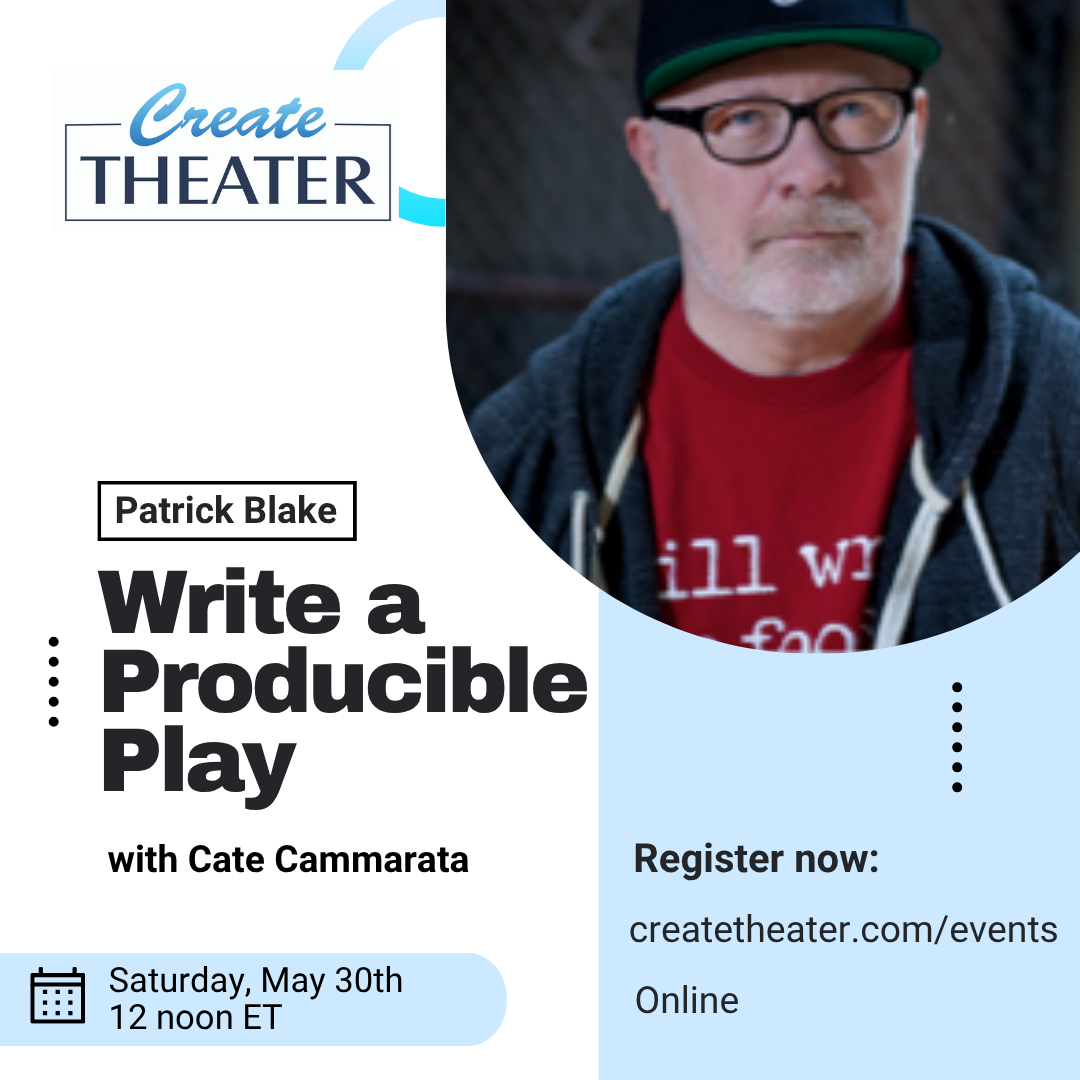
If this opened your eyes to how producers actually evaluate your script…
Then you’ll want to be in the room for our live training:
Write a Producible Play Webinar on May 30th
Off-Broadway Producer Patrick Blake and I will walk you through exactly how to check your work so it’s not just compelling, but something a producer can get on board with.
Stay in the loop with our upcoming workshops!